Flood Water Cleanup in Weare, NH
Floodwater from a river, lake or washed-out yard carries mud and bacteria into a house. The crew pumps it out, removes what it contaminated and sanitizes and dries what remains.
(888) 670-6527Weare flood cleanup help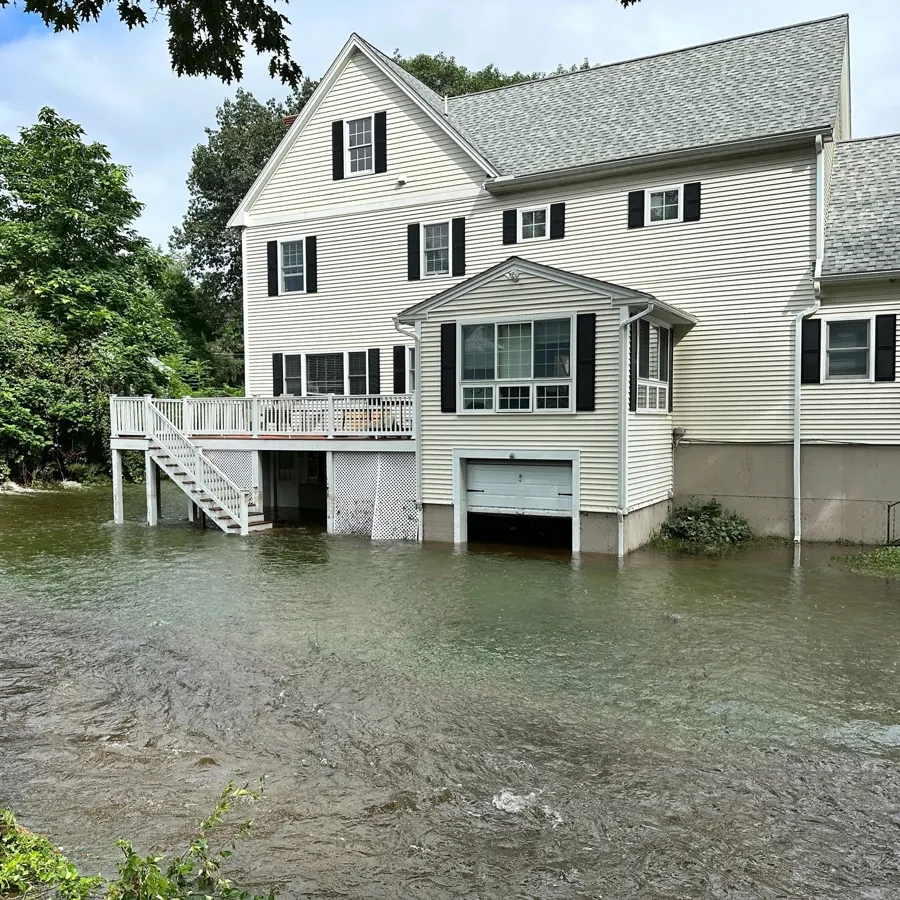
First steps for flood water cleanup in Weare
Weare is drained by the Piscataquog River, held back by Lake Horace and Everett Lake, and about 3,500 acres of the town sit in floodplain. When that water reaches a house, it arrives with soil, bacteria and debris.
Stay out of the water Floodwater can hide debris, sharp objects and live current, so do not wade in until power is off and the depth is known.
Shut off power and gas Turn off electricity at the main only if the panel is dry, and call the utility when water has reached outlets.
Leave the heating alone Keep the furnace and water heater off until they are inspected, since flood water in a burner or ductwork spreads contamination.
Photograph then call Photograph the high-water mark on each level, then call so removal and sanitizing can be planned.
Drinking water at risk?
If floodwater reached the wellhead, switch to bottled water until the supply is tested. The restoration crew cleans the house, and a lab confirms the well is safe.
(888) 670-6527Ask about well concernsHow the Weare restoration team handles flood water cleanup
Rapid local response
Dispatch runs around the clock, and active water is treated as urgent at any hour, weekends and holidays included.
IICRC S500 drying standard
Structural drying, not surface drying: air movers and LGR dehumidifiers sized to the class of loss, checked with daily readings.
Claim-ready documentation
Moisture maps, daily psychrometric logs and timestamped photos taken before any demolition go into the claim file.
Cold-climate know-how
Frozen pipes, ice dams, snowmelt in older stone basements and spring river flooding set how a home here gets wet.
What does flood water cleanup cost in Weare, NH?
Flood water cleanup commonly costs $3,000 to $60,000, with depth, number of levels and the amount of porous material removed setting the price. A shallow garage or crawl space stays near the bottom.
- Shallow water in unfinished space
- Pump-out and scrubbing
- Antimicrobial and drying
- Finished space under water
- Drywall, flooring and insulation out
- Containment plus structural drying
- Water on more than one level
- All porous finishes removed
- Weeks of drying and monitoring
Documentation for your insurance claim
The restoration team builds the claim file: a moisture map, daily drying logs, timestamped photos before demolition and a line-item scope. A sudden pipe or appliance leak is usually a homeowners claim; rising flood water usually needs a flood policy. Coverage depends on your policy, so check with your own insurer.
Ranges are typical, not a quote: water category, square footage, material class and how fast drying started move the number most. Run the water damage cost calculator for a closer range.
How flood water cleanup is handled in Weare
The tech who does the walkthrough maps moisture before any equipment goes down, so the drying plan matches what is actually wet. Equipment stays until the readings say dry, not until it looks dry.
Assess and contain
The crew checks depth, current and contamination, then seals off clean areas before heavy work starts.
Pump and remove debris
Water and silt come out first, then soaked porous materials are cut away and hauled out.
Clean and sanitize
Hard surfaces and framing are scrubbed and treated with antimicrobial solution.
Dry and verify
Dehumidifiers and air movers run until readings show the framing, slab and subfloor are dry.
Where flood risk concentrates
The largest flood hazard areas lie in the Choate Brook, Barnard Hill and Meadowbrook watersheds. The town's hazard mitigation committee lists the fields south of Everett Dam, John Connor Bridge, Riverdale Bridge and Dam, Peacock Hill Road and Oak Hill Road as recurring trouble spots, and FEMA maps mark Zone A and Zone AE land.
- Brook and river overflow after spring snowmelt
- Lake levels that rise after a week of rain
- Culverts that clog or fail in a heavy storm
- Runoff pooling around foundations
What flood cleanup involves
Flood water is Category 3, so the crew works in protective gear and treats porous materials as disposable. Carpet, pad, insulation and drywall that soaked up water come out, mud is removed, and hard surfaces are scrubbed and treated with antimicrobial solution. Dehumidifiers and air movers take over from there.
Floodplain rules and repair cost
Town floodplain rules apply to FEMA special flood hazard areas and define substantial damage as repair costing 50 percent or more of a structure's market value. A documented scope helps show where a repair sits against that threshold, so the records matter as much as the cleanup.
- Photos of the high-water mark on each level
- Itemized lists of every removed material
- Moisture logs from each drying visit
Wells and septic after a flood
Houses here depend on private wells and septic tanks, and floodwater can reach both. Owners commonly have a well tested before drinking from it again, and a septic system that drains slowly after a flood should be checked by a septic professional. The related work is described at flood water cleanup in Concord and sewage backup cleanup.
Flood water cleanup across Weare and nearby towns
Flood cleanup covers the low ground and the river corridors, from neighborhoods near Riverdale and Chase Village to homes by Everett Lake, Lake Horace, Daniels Lake and the brooks that feed them.
The same service nearby: flood water cleanup in Concord, Hopkinton, Bow.
Related water damage services in Weare
Flood Water Cleanup questions in Weare, NH
Water still spreading?
Flood water in the house? Describe it and the crew will plan the removal, sanitizing and drying.
(888) 670-6527 Request flood cleanupIs flood water always Category 3?
Water from rivers, lakes and washed-out yards is treated as Category 3 because it carries soil, sewage and chemicals. That is why porous materials are removed rather than dried.
Does homeowner insurance cover a flood?
Standard homeowner policies usually exclude flood, which needs separate coverage through the National Flood Insurance Program or a private insurer. Ask the adjuster which policy responds.
Can a flooded house be saved?
Usually the structure can, because framing and slabs dry. The soaked carpet, pad, insulation and low drywall are the materials that rarely return to service.
How long until I can rebuild?
Rebuilding waits until readings show the framing and slab are dry, which commonly takes one to three weeks for a large flood, depending on materials and weather.
What happens to the well and the septic system?
Floodwater can contaminate a wellhead and saturate a septic field, so owners test the well and avoid heavy water use until the system drains normally again.
Why does substantial damage matter?
In Zone A and Zone AE, repairs costing 50 percent or more of a structure's market value count as substantial damage under the town's floodplain regulations.
Clear the flood water and the contamination it left
Containment, removal and drying are sequenced so clean areas stay clean.
(888) 670-6527Call about the flood