Ice Dam Water Damage in Concord, NH
Ice dams push meltwater under the shingles and into Concord ceilings and exterior walls. The drying team pulls wet insulation, dries the cavities and documents the loss for your claim.
(888) 670-6527Ice dam leaking into a Concord ceiling? Call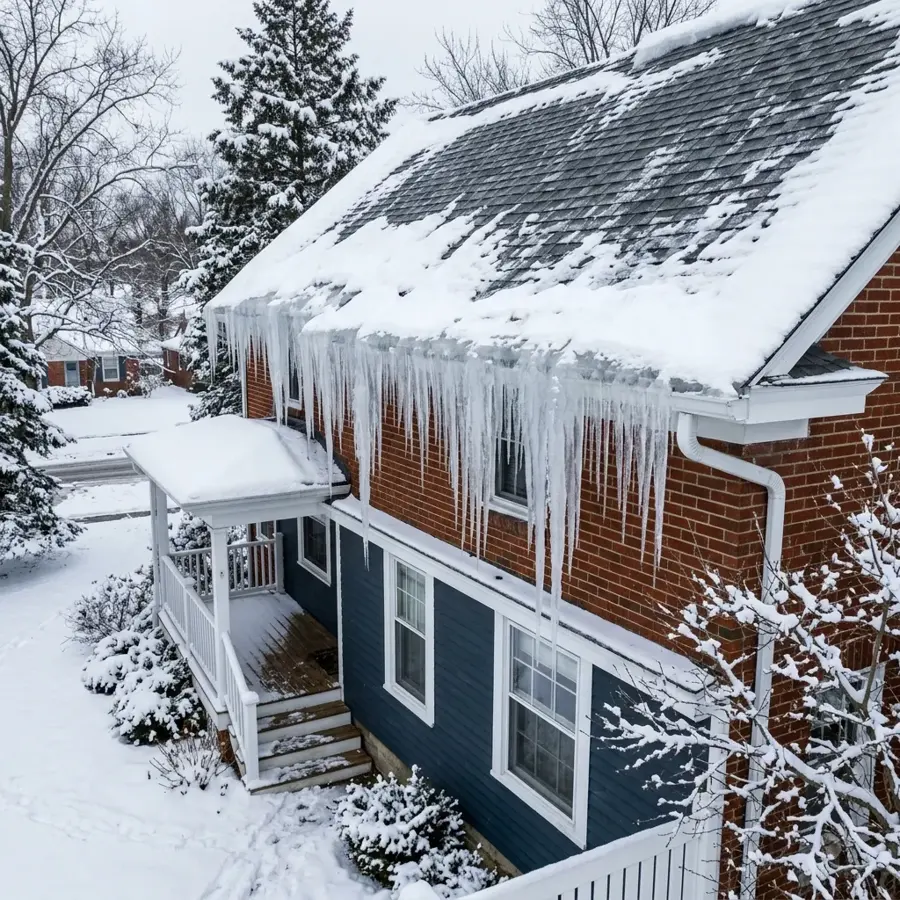
First steps for ice dam water damage in Concord
The area gets roughly 60 to 70 inches of snow a year. When heat escaping from the living space warms the roof deck, snow melts, runs down to the cold eaves and freezes into a ridge of ice. The next meltwater pools behind that ridge and works its way under the shingles.
Catch the drip. Set buckets and towels under active drips and move furniture and electronics out of the way.
Stay off the icy roof. Chipping at an ice dam is dangerous and can tear shingles; leave the roof edge to a pro with the right gear.
Relieve a bulging ceiling carefully. If water pools above a sagging ceiling, keep people clear of it and call before it gives way.
Photograph stains and icicles. Pictures of the ice at the eaves and the stains inside help document the source for the claim.
Ice dam water keeps coming
Each thaw sends more meltwater under the shingles. Drying the insulation and walls now keeps the damage from repeating all season.
(888) 670-6527Stop the Concord ice dam damageHow the Concord restoration team handles ice dam water damage
Rapid local response
Dispatch runs around the clock, and active water is treated as urgent at any hour, weekends and holidays included.
IICRC S500 drying standard
Structural drying, not surface drying: air movers and LGR dehumidifiers sized to the class of loss, checked with daily readings.
Claim-ready documentation
Moisture maps, daily psychrometric logs and timestamped photos taken before any demolition go into the claim file.
Cold-climate know-how
Frozen pipes, ice dams, snowmelt in older stone basements and spring river flooding set how a home here gets wet.
What does ice dam water damage cost in Concord, NH?
Ice dam water damage in Concord, NH typically costs $1,000 to $6,000 to dry out, set by how much attic insulation got wet, how far the water ran down the walls and how many rooms show stains.
- One ceiling area near the eaves
- Wet insulation removed above it
- Two to four days of drying
- Water inside exterior wall cavities
- Drywall or plaster opened
- Cavity and attic drying
- Long freeze-thaw leaks
- Insulation across the eaves
- Multiple ceilings and walls
Documentation for your insurance claim
The restoration team builds the claim file: a moisture map, daily drying logs, timestamped photos before demolition and a line-item scope. A sudden pipe or appliance leak is usually a homeowners claim; rising flood water usually needs a flood policy. Coverage depends on your policy, so check with your own insurer.
Ranges are typical, not a quote: water category, square footage, material class and how fast drying started move the number most. Run the Concord water damage cost calculator for a closer range.
How ice dam water damage is handled in Concord
The tech who does the walkthrough maps moisture before any equipment goes down, so the drying plan matches what is actually wet. Equipment stays until the readings say dry, not until it looks dry.
Map from the attic down
Thermal imaging and meters find wet sheathing, insulation, ceilings and wall cavities below the ice dam.
Pull wet insulation
Soaked insulation is removed from over the ceiling so the framing and drywall can dry.
Dry attic, ceiling and walls
LGR dehumidifiers and air movers dry the attic space, the ceiling and the exterior wall cavities.
Verify and document
Daily readings, photos of the ice at the eaves and the wet areas inside go into the claim file.
How ice dam water travels
Water that backs up under the shingles soaks the roof sheathing, drips onto the attic insulation and runs down inside exterior walls. It often shows up first as a stain at the top of a wall near a window, or as peeling paint and wet plaster in the corner of a ceiling, well away from the actual entry point.
- Stains along the top of exterior walls and ceiling edges
- Wet, matted attic insulation over the eaves
- Water at window heads and inside wall cavities
Why older Concord roofs see more of it
Many older capes and colonials here have limited attic insulation and air leaks around chimneys, light fixtures and attic hatches, so warm air reaches the roof deck. The Department of Energy Energy Saver program points to air sealing and attic insulation as the long-term fix; the restoration work deals with the water already inside.
How the drying team dries an ice dam loss
The tech who does the walkthrough maps the wet area with thermal imaging and meters from the attic down. Wet insulation comes out because it holds water against the framing, ceiling drywall is opened only where readings call for it, and LGR dehumidifiers with air movers dry the attic, the ceiling and the wall cavities to the dry reference.
- Wet insulation is bagged and removed from over the ceiling
- Exterior wall cavities are checked and dried, not just the ceiling
- Readings are logged daily until every material reads dry
Before the next storm
Ice dam leaks repeat during long freeze-thaw stretches, so a roofer or snow-removal service clearing the roof edge matters, as the National Weather Service winter safety page notes for heavy snow. For leaks that are not tied to ice, see roof leak water damage, and for water from a fixture upstairs see ceiling leak water damage.
Ice dam water damage across Concord and Merrimack County
Concord Water Damage Restoration covers ZIP 03301, 03302, 03303 and 03305, from Downtown and Main Street and the South End out to Concord Heights, East Concord, West Concord and Penacook along the Contoocook.
Nearby coverage reaches Bow, Pembroke, Hopkinton, Hooksett, Weare, Boscawen, Loudon and Canterbury.
Related water damage services in Concord
Ice Dam Water Damage questions in Concord, NH
Water still spreading?
Ice dam stains spreading? The drying team dries ceilings and walls 24/7.
(888) 670-6527 Call about Concord ice dam leaksWhat causes ice dams here?
Heat escaping into the attic warms the roof deck and melts snow, which refreezes at the colder eaves. With heavy snow and long cold spells, ice dams form on many older roofs.
How do I know water is coming from an ice dam?
Ice dam leaks usually show up in winter as stains near the top of exterior walls, at window heads or along ceiling edges, often during a thaw after heavy snow.
Does insurance cover ice dam water damage?
Water damage inside the home from an ice dam is often covered under a homeowners policy, while the ice removal and roof repair may be treated differently. Coverage depends on your policy, so check with your own insurer.
Does wet attic insulation have to be replaced?
Usually. Wet fiberglass and cellulose hold water against the framing and lose much of their insulating value, so soaked insulation is removed and replaced after the attic dries.
Can ceiling drywall dry in place after an ice dam leak?
Often, if the water was caught early and the drywall has not sagged or crumbled. Readings decide, and a sagging ceiling is opened for safety.
Will ice dams keep coming back?
They can, during every long freeze-thaw stretch. Air sealing and attic insulation reduce them, and keeping the roof edge clear helps between storms.
Meltwater in the ceiling? Get the insulation and walls dried.
Attic, ceiling and wall-cavity drying with claim photos, all winter long.
(888) 670-6527Concord ice dam drying, 24/7