Flood Water Cleanup in Bow, NH
Water from the Merrimack River, the Turkey River or storm runoff carries silt, sewage and debris into a Bow home. The crew removes what cannot be saved, washes what can and dries the structure.
(888) 670-6527Call about flood water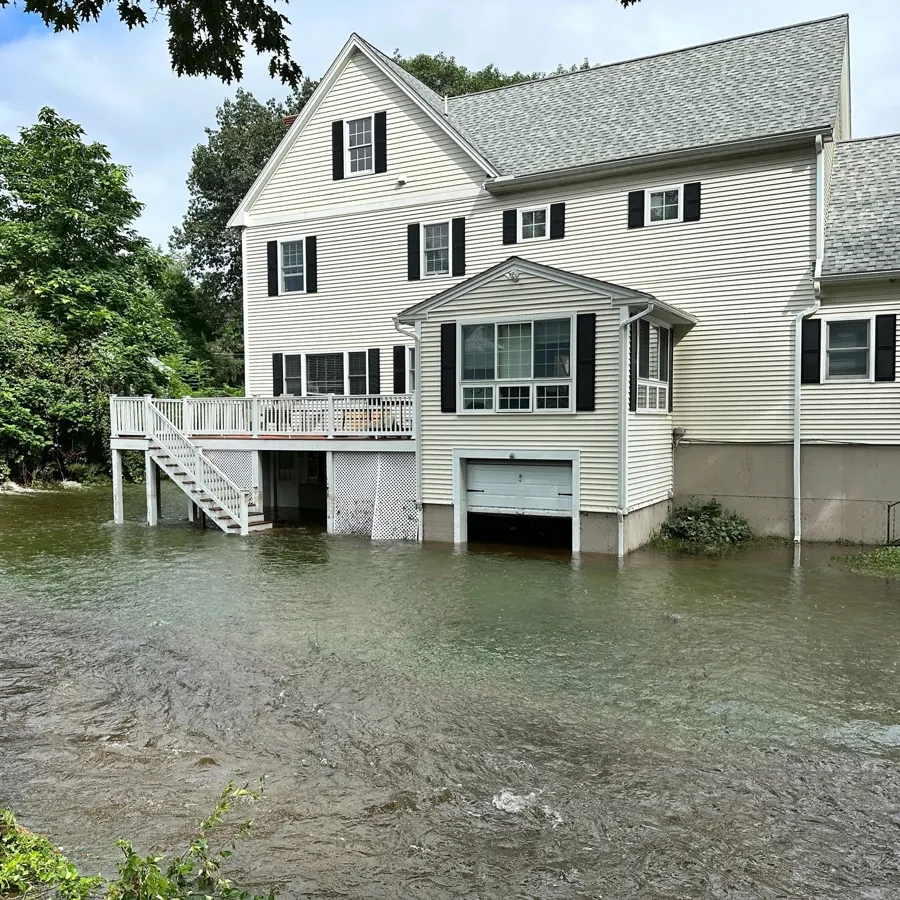
First steps for flood water cleanup in Bow
Flood water is not the same as a plumbing leak. It arrives carrying silt, sewage and debris, and in Bow the main sources are the Merrimack River, the Turkey River and runoff that finds low ground in a severe storm. That makes cleanup as much about sanitizing as drying.
Stay out of the water Floodwater can hide debris and live wires. Wait until the water drops and the power is off before walking through.
Protect your health Wear boots and gloves, wash hands after any contact and keep pets and everyone else away from the wet area.
Document the flood Photograph the high-water mark inside and out, plus the damaged contents, before any cleanup begins.
Report contaminated water Say the water came from outside so the crew brings containment, removal and washing gear.
Skip the drains and the washer
If floodwater has reached the septic system or the plumbing, avoid running washers or flushing toilets, since backups can follow.
(888) 670-6527Ask about septic after floodingHow the Bow restoration team handles flood water cleanup
Rapid local response
Dispatch runs around the clock, and active water is treated as urgent at any hour, weekends and holidays included.
IICRC S500 drying standard
Structural drying, not surface drying: air movers and LGR dehumidifiers sized to the class of loss, checked with daily readings.
Claim-ready documentation
Moisture maps, daily psychrometric logs and timestamped photos taken before any demolition go into the claim file.
Cold-climate know-how
Frozen pipes, ice dams, snowmelt in older stone basements and spring river flooding set how a home here gets wet.
What does flood water cleanup cost in Bow, NH?
Flood water cleanup runs from $3,000 for a garage or low space to $60,000 when the whole house was hit. Contamination, depth and the number of levels affected explain most of the gap.
- Shallow water in an unfinished area
- Pump-out and thorough cleaning
- Antimicrobial treatment and drying
- Finished space under water
- Drywall, flooring and insulation out
- Containment and structural drying
- Water across more than one level
- Porous finishes removed throughout
- Weeks of drying and checks
Documentation for your insurance claim
The restoration team builds the claim file: a moisture map, daily drying logs, timestamped photos before demolition and a line-item scope. A sudden pipe or appliance leak is usually a homeowners claim; rising flood water usually needs a flood policy. Coverage depends on your policy, so check with your own insurer.
Ranges are typical, not a quote: water category, square footage, material class and how fast drying started move the number most. Run the water damage cost calculator for a closer range.
How flood water cleanup is handled in Bow
The tech who does the walkthrough maps moisture before any equipment goes down, so the drying plan matches what is actually wet. Equipment stays until the readings say dry, not until it looks dry.
Contain the area
Plastic barriers and filtered air keep contaminated dust away from rooms the flood never reached.
Extract and remove
Water is pumped out, and ruined porous materials are bagged and carried away.
Clean and treat
Framing, slab and hard surfaces are washed, then treated with an antimicrobial product.
Dry and clear
Equipment dries the structure until readings pass, and the file is prepared for the adjuster.
Where floodwater reaches
The 2006 hazard plan counted 174 homes and 43 non-residential buildings in or next to the floodplain, mostly along the river in the eastern and northeastern parts of town. Hazard plans also name Hall Street, River Road, Dunklee Road and the Bow Bog Meeting House area as places that can flood in severe storms.
- River water spilling over its banks
- Runoff sheeting off pavement and highways
- Brooks and culverts overwhelmed by heavy rain
- Eroding riverbanks that shift the water's path
Why floodwater counts as contaminated
Moving water picks up soil, fuel, fertilizer and sewage from wherever it has traveled, and septic systems and drains along the way can add to the mix. For that reason porous materials such as carpet, pad, insulation and soft drywall are removed, and hard surfaces are washed and treated before drying begins.
What the cleanup involves
The extraction crew works in protective gear, pumps out the water, then hauls out ruined materials and washes the surfaces left behind. Antimicrobial treatment follows, and only then do air movers and dehumidifiers start the structural dry. Contents are sorted into salvage and discard piles, with photos for the claim.
- Protective gear and containment between clean and wet zones
- Washing and antimicrobial treatment of framing and slab
- Photo inventory of every discarded item
Flood insurance and paperwork
Standard homeowner policies usually exclude rising water, so flood coverage is a separate policy. The town entered the National Flood Insurance Program in October 1978, and FEMA publishes the maps owners check. The Environmental Protection Agency lists safe handling for flooded materials. See basement flooding cleanup for lower-level losses.
Flood water cleanup across Bow and nearby towns
Flood work centers on the river side along Hall Street and River Road, the Bow Mills area beside the Turkey River and the low-lying roads that fill during severe storms.
The same service nearby: flood water cleanup in Concord, Pembroke, Hooksett.
Related water damage services in Bow
Flood Water Cleanup questions in Bow, NH
Water still spreading?
Flood water in the house or garage? Describe what it touched and the team will explain what gets removed.
(888) 670-6527 Bow flood cleanup helpIs river flood water ever safe to clean myself?
A thin film on a hard floor can be handled with gloves and disinfectant, but anything that soaked into carpet, drywall or insulation should be removed. Large floods need containment and protective gear.
Why is carpet thrown away after a flood?
Carpet and pad hold silt and bacteria that cannot be rinsed out, so they are discarded even when they look clean after drying.
How long does flood cleanup take?
Removal and cleaning come first, and drying follows for as long as the readings require. Depth, materials and how much of the building got wet decide the schedule.
Does the floodplain count mean my house is at risk?
The 2006 count included 174 homes and 43 non-residential buildings in or next to the floodplain, mostly in the eastern and northeastern parts of town. Checking a property's flood zone is the way to know.
Can flooding affect my septic system?
Yes. High groundwater and river flooding can saturate a leach field and slow drainage, and backups can follow. Sewage cleanup applies if wastewater enters the house.
Will flood insurance cover my belongings?
Coverage depends on the policy, and contents are often a separate item. Flood policies pay for rising water while a standard homeowner policy usually does not, so the claim file must name the source clearly.
Flood residue stays behind long after the water drops
Tell the team how deep the water was and where it came from.
(888) 670-6527Plan the flood cleanup here