Flood Water Cleanup in Hopkinton, NH
The Contoocook River has flooded Contoocook Village before, and the flood control dams do not shield the town from it. The restoration team handles river floodwater as contaminated, from pump-out through full drying.
(888) 670-6527Request flood response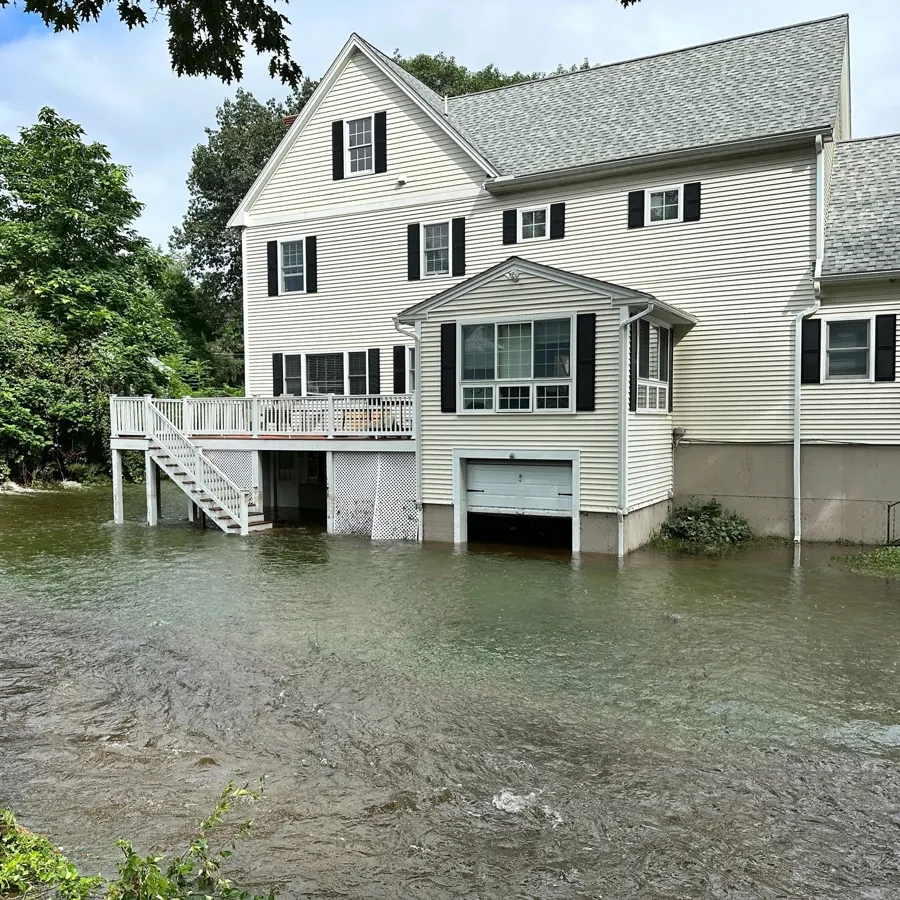
First steps for flood water cleanup in Hopkinton
A river flood is not a plumbing accident. The water arrives with silt, debris and sewage from upstream, and it stays for a day or more. In March 1936, heavy rain and warm weather put several feet of water through Contoocook Village, and ice and lumber rushed into the village square.
Stay out of the water Floodwater can carry sewage and hide electrical hazards. Wait for power to be shut off before entering a flooded space.
Document the high-water marks Photograph how high the water reached inside and outside, and note when the river started to rise.
Save what is dry Carry dry papers, medications and electronics upstairs. Leave wet upholstery and carpet in place for the crew to assess.
Notify insurer and crew Report the loss to the insurer and ask about flood coverage separately. Then contact the restoration team.
Ground still flooded?
Wait until the water has receded and the utility has shut off power. Entering earlier risks shock, contaminated skin contact and floors that have shifted underfoot.
(888) 670-6527Ask about flood responseHow the Hopkinton restoration team handles flood water cleanup
Rapid local response
Dispatch runs around the clock, and active water is treated as urgent at any hour, weekends and holidays included.
IICRC S500 drying standard
Structural drying, not surface drying: air movers and LGR dehumidifiers sized to the class of loss, checked with daily readings.
Claim-ready documentation
Moisture maps, daily psychrometric logs and timestamped photos taken before any demolition go into the claim file.
Cold-climate know-how
Frozen pipes, ice dams, snowmelt in older stone basements and spring river flooding set how a home here gets wet.
What does flood water cleanup cost in Hopkinton, NH?
A garage or shallow crawl area costs $3,000 to $8,000 after a flood. A basement or first floor runs $8,000 to $25,000, and a whole-house loss across more than one level reaches $25,000 to $60,000.
- Shallow water in unfinished space
- Pump-out and washing
- Antimicrobial treatment and drying
- A finished level under water
- Drywall, flooring and insulation removed
- Containment and full drying
- Water on more than one level
- All porous finishes removed
- Weeks of drying with monitoring
Documentation for your insurance claim
The restoration team builds the claim file: a moisture map, daily drying logs, timestamped photos before demolition and a line-item scope. A sudden pipe or appliance leak is usually a homeowners claim; rising flood water usually needs a flood policy. Coverage depends on your policy, so check with your own insurer.
Ranges are typical, not a quote: water category, square footage, material class and how fast drying started move the number most. Run the water damage cost calculator for a closer range.
How flood water cleanup is handled in Hopkinton
The tech who does the walkthrough maps moisture before any equipment goes down, so the drying plan matches what is actually wet. Equipment stays until the readings say dry, not until it looks dry.
Contain and pump
Crews seal off clean areas and pump the floodwater down in stages while checking for fuel, sewage and debris.
Remove porous items
Carpet, pad, insulation, soft drywall and upholstery that touched the water are bagged out and listed for the claim.
Wash and treat
Hard surfaces and framing are washed, then treated with antimicrobial so the structure is safe to dry.
Dry and verify
Dehumidifiers and air movers run for days or weeks, with logged readings proving each material is dry.
Why the dam does not protect homes here
The dam on the Contoocook River and a sister dam in Weare were built in the early 1960s as an Army Corps of Engineers flood control project. The 2004 Hazard Mitigation Plan says the project is designed to protect areas downstream on the Merrimack River, not Hopkinton itself.
- The Contoocook River north of the flood control area
- The Clement Hill Road area
- The Broad Cove Road area
- The village of Contoocook
What floodwater does inside a house
River water soaks upholstery, carpet, pad, insulation and the bottom of every wall, and it leaves a film of silt on hard surfaces. Porous materials that touched it are removed, hard surfaces are washed and treated, and the structure is dried only after the contaminated layers are gone.
Floodplain rules before you rebuild
The Floodplain Development Ordinance, adopted in 1988, covers FEMA special flood hazard areas, requires a permit for development there and is enforced by the Building Inspector. Anyone planning more than cleanup in a mapped area should check with the town's building office first, and FEMA maps and National Weather Service warnings show where a house stands.
- Photos of high-water marks inside and outside
- Notes on how deep the water got and how long it stayed
- Receipts for cleanup, pumping and temporary housing
The river's record
The USGS gage below the dam recorded a peak of 7,530 cubic feet per second on April 8, 1987, and 5,460 cubic feet per second in the May 2006 flood. Ice jams on the river were recorded in March 1968, February 1970 and March 1979. Related work includes basement flooding cleanup and sewage backup cleanup.
Flood water cleanup across Hopkinton and nearby towns
Flood cleanup covers Contoocook village along the river, the Clement Hill Road and Broad Cove Road areas named in the 2004 plan, and the town's other two villages.
The same service nearby: flood water cleanup in Concord, Weare, Bow.
Related water damage services in Hopkinton
Flood Water Cleanup questions in Hopkinton, NH
Water still spreading?
Tell the crew how high the water reached and how long it stayed, and the plan starts there.
(888) 670-6527 Describe the flood lossWhy is floodwater treated as Category 3?
It comes from rivers and storm runoff that mix with sewage, fuel and soil. That means porous materials are removed rather than dried and hard surfaces are sanitized.
Does the flood control dam keep floods out of town?
No. The 2004 plan says the flood control project protects areas downstream on the Merrimack River, not the town itself.
Is flood damage covered by regular homeowners insurance?
Usually not. Rising water is commonly excluded, and flood coverage through the National Flood Insurance Program or a private policy is separate.
How long after a flood is it safe to return?
After power is checked, contaminated materials are removed and the structure is drying. The crew can say when specific rooms are safe to use.
Can furniture and contents be saved?
Hard items such as solid wood can often be cleaned. Upholstered pieces and mattresses touched by floodwater are generally discarded.
Do permits matter after a flood?
In a FEMA special flood hazard area, development needs a permit under the town's Floodplain Development Ordinance, so ask the building office before major repairs.
Floodwater in the house? Get the cleanup moving.
The restoration team contains the area, removes the contaminated materials and dries the structure until the readings are normal.
(888) 670-6527Request flood response