Flood Water Cleanup in Concord, NH
Flood water in Concord is handled as Category 3 from the start. The mitigation team pumps it out, removes what it touched, treats the surfaces and dries the structure to a verified reading.
(888) 670-6527Flood water in a Concord home? Call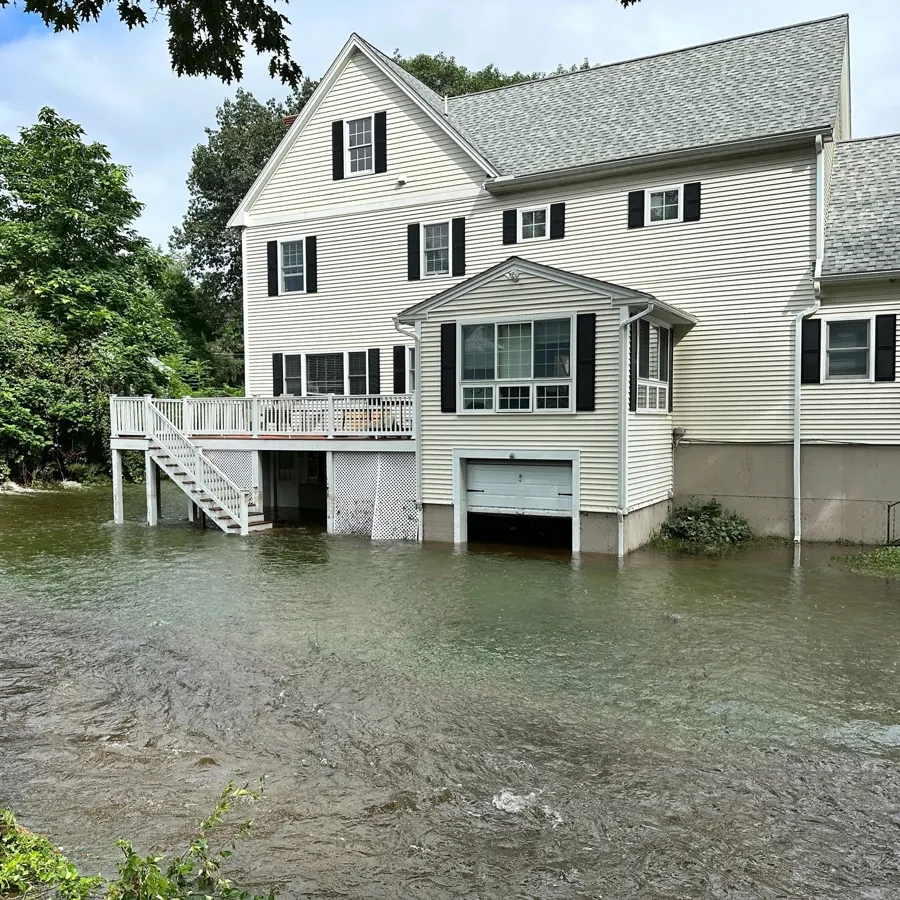
First steps for flood water cleanup in Concord
Concord is a river city. The Merrimack runs through it, the Contoocook joins at Penacook, the Soucook marks the eastern edge and the Turkey River crosses the southwest. The Merrimack set its record crest in March 1936, and the May 2006 Mother's Day flood pushed it back over flood stage.
Wait for the all-clear. Do not wade into flood water or enter a flooded basement until officials and the power company say it is safe.
Keep the power off. Have the main breaker off before anyone steps into a flooded space, and keep gas appliances off until checked.
Photograph the high-water mark. Pictures of the water line on walls and contents in every room help the flood claim.
Wear gloves and boots. Flood water carries sewage and chemicals; avoid skin contact and keep children and pets away.
Flood water is Category 3
River and surface water carries sewage and chemicals, so soaked porous materials come out and every surface it touched gets cleaned and treated before drying.
(888) 670-6527Start the Concord flood cleanupHow the Concord restoration team handles flood water cleanup
Rapid local response
Dispatch runs around the clock, and active water is treated as urgent at any hour, weekends and holidays included.
IICRC S500 drying standard
Structural drying, not surface drying: air movers and LGR dehumidifiers sized to the class of loss, checked with daily readings.
Claim-ready documentation
Moisture maps, daily psychrometric logs and timestamped photos taken before any demolition go into the claim file.
Cold-climate know-how
Frozen pipes, ice dams, snowmelt in older stone basements and spring river flooding set how a home here gets wet.
What does flood water cleanup cost in Concord, NH?
Flood water cleanup in Concord, NH typically costs $3,000 to $25,000 or more, set by the water depth, how many rooms and levels it reached and how much flooring, drywall and insulation must come out.
- Shallow water in an unfinished space
- Pump-out and cleaning
- Antimicrobial and drying
- Finished space under water
- Drywall, flooring and insulation out
- Containment and structural drying
- Water through more than one level
- Full removal of porous finishes
- Weeks of drying and monitoring
Documentation for your insurance claim
The restoration team builds the claim file: a moisture map, daily drying logs, timestamped photos before demolition and a line-item scope. A sudden pipe or appliance leak is usually a homeowners claim; rising flood water usually needs a flood policy. Coverage depends on your policy, so check with your own insurer.
Ranges are typical, not a quote: water category, square footage, material class and how fast drying started move the number most. Run the Concord water damage cost calculator for a closer range.
How flood water cleanup is handled in Concord
The tech who does the walkthrough maps moisture before any equipment goes down, so the drying plan matches what is actually wet. Equipment stays until the readings say dry, not until it looks dry.
Make it safe
Power and gas are confirmed off, and the crew sets containment and protective gear for Category 3 work.
Pump and remove
Standing water is pumped out, and soaked carpet, drywall, insulation and flooring are removed.
Clean and treat
Framing, slab and hard surfaces are cleaned and treated with an EPA-registered antimicrobial.
Dry and document
Dehumidifiers and air movers dry the structure while readings and photos build the flood claim file.
Why flood water is always Category 3
Water that flows over the ground or rises from a river picks up soil, fuel, sewage and whatever else it crosses. Restoration treats it as Category 3 from the first minute: porous materials it touched are removed, not dried, and the crew works in protective gear. Check the NOAA gauge for the Merrimack River before re-entering a home near the river.
- Carpet, pad, insulation and soaked drywall are removed
- Hard surfaces are cleaned and treated with an EPA-registered antimicrobial
- Contents that cannot be cleaned are photographed and listed for the claim
How a flooded home is brought back to dry
After the water recedes, pumps and extraction clear what is left. The mitigation team cuts drywall well above the high-water mark, removes wet insulation and flooring, cleans and treats the framing and the slab, then sets LGR dehumidifiers and air movers until every material reads dry. Electrical and heating systems that were under water are checked by an electrician and a heating technician before they run again.
Flood insurance is a separate policy
Standard homeowners policies exclude flood damage from rising water. Flood coverage comes from a separate policy, usually through the National Flood Insurance Program, and the adjuster will want photos, the water depth and a line-item scope. The National Weather Service flood safety page covers what to do before and after the water rises.
- Photos of the high-water mark in every room
- Moisture readings and the removal scope
- A list of damaged contents with photos
Flooding versus other basement water
Not every wet basement is a flood claim. Water from a burst pipe or a failed sump pump is handled under a different part of a policy; see basement flooding cleanup and storm water damage for those cases.
Flood water cleanup across Concord and Merrimack County
Concord Water Damage Restoration covers ZIP 03301, 03302, 03303 and 03305, from Downtown and Main Street and the South End out to Concord Heights, East Concord, West Concord and Penacook along the Contoocook.
Nearby coverage reaches Bow, Pembroke, Hopkinton, Hooksett, Weare, Boscawen, Loudon and Canterbury.
Related water damage services in Concord
Flood Water Cleanup questions in Concord, NH
Water still spreading?
River or surface water inside your home? The mitigation team handles it 24/7.
(888) 670-6527 Call about Concord flood waterIs it safe to clean up flood water myself?
Flood water carries sewage, fuel and chemicals, and flooded homes can have electrical hazards. Protective gear, containment and an antimicrobial are part of a proper cleanup.
Does homeowners insurance cover river flooding?
Standard homeowners policies exclude damage from rising water. Flood coverage comes from a separate flood policy, so check with your own insurer and your flood carrier.
What has to be thrown out after a flood?
Porous materials soaked by flood water, such as carpet, pad, insulation, mattresses and drywall below the high-water mark, are removed. Hard surfaces can usually be cleaned and treated.
How high is drywall cut after a flood?
Usually at least a foot above the high-water mark, so the wet insulation and the cavity can be cleaned and dried. Readings decide where wet material stops.
Has the city flooded badly before?
Yes. The Merrimack set its record crest in March 1936, and the May 2006 Mother's Day flood pushed it back over flood stage after more than 8 inches of rain in three days.
How long does drying take after a flood?
Usually one to two weeks once the water is gone and the wet materials are out, longer for deep water or masonry, and readings decide when it is dry.
Flood water in the house? Get it out and treated.
Category 3 cleanup, drying and flood claim documentation, around the clock.
(888) 670-6527Concord flood cleanup, 24/7