Water Damage Restoration Concord, NH
24/7 water damage restoration in Concord, NH. The restoration team extracts standing water, dries the structure to the IICRC S500 standard and documents every step for your insurance claim.
(888) 670-6527Stop the water in your home now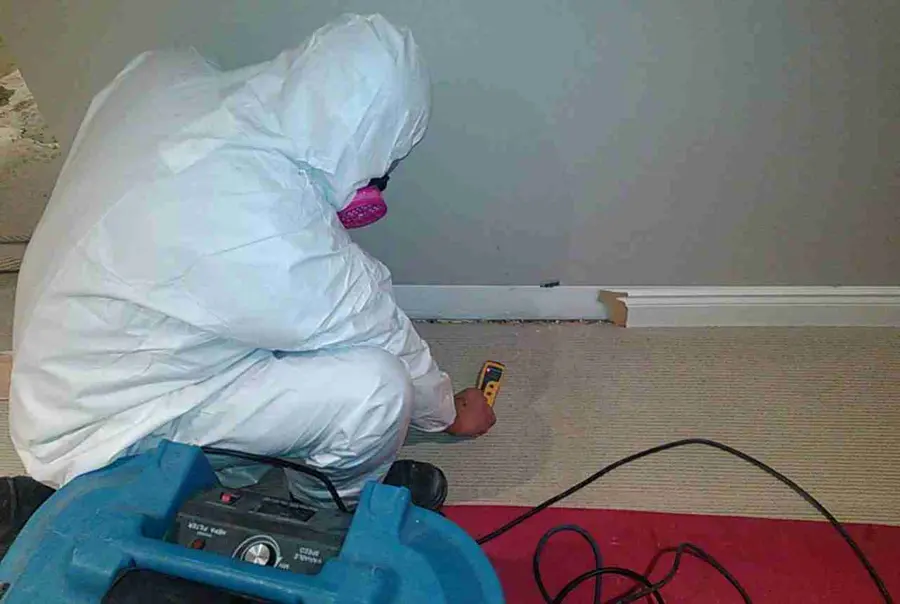
Water Damage Restoration Services in Concord, NH
Water and sewage only, from the first extraction pass to the last dry reading. Filter by what is happening in your home: an urgent leak, winter damage, a wet basement, drying or a business.
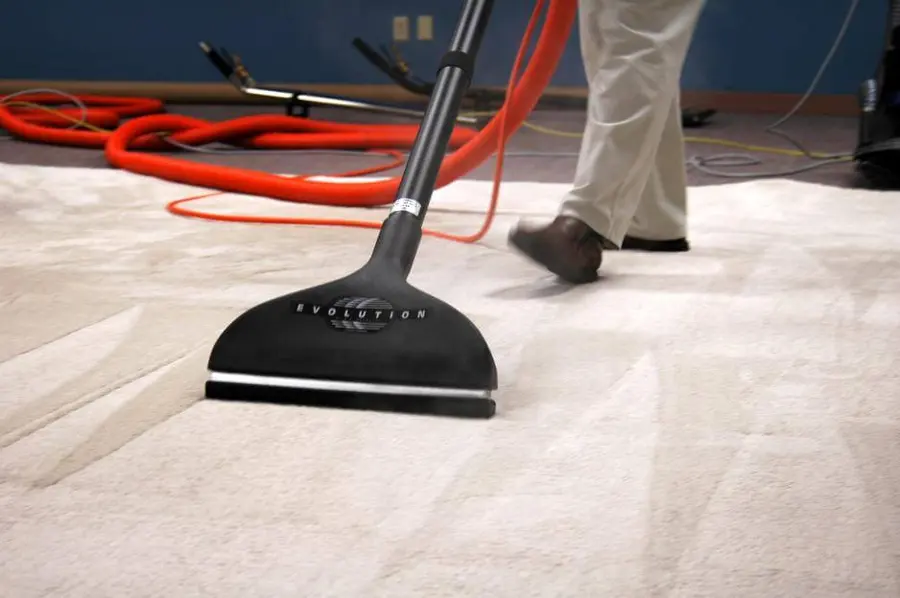 Water Extraction and RemovalTruck-mounted and portable units pull standing water from carpet, pad and floors before it wicks into drywall and framing.Service details
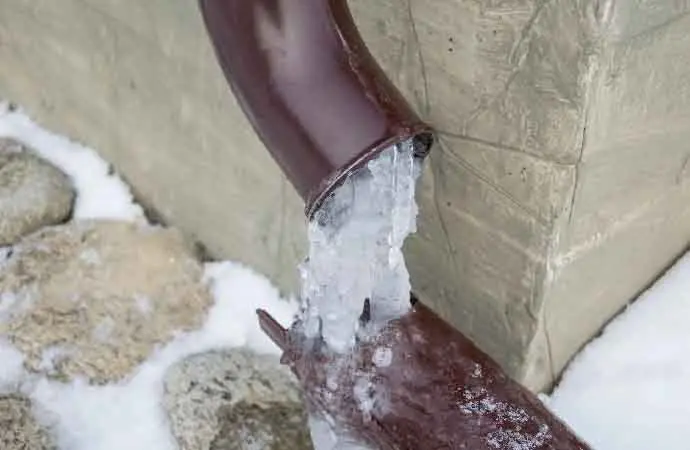 Frozen Pipe Water DamagePipes in exterior walls and unheated spaces split in January cold. The extraction crew opens the wall and dries the cavity.Service details
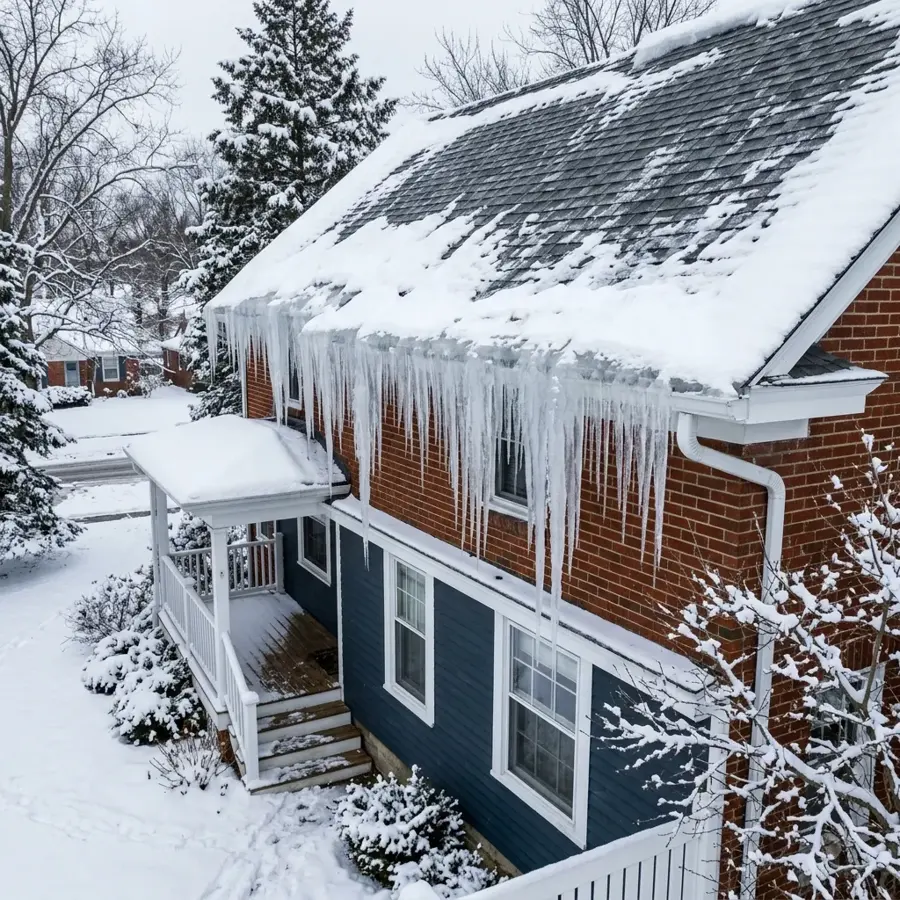 Ice Dam Water DamageMeltwater backs up under the shingles at the eaves and soaks attic insulation, ceilings and exterior walls.Service details
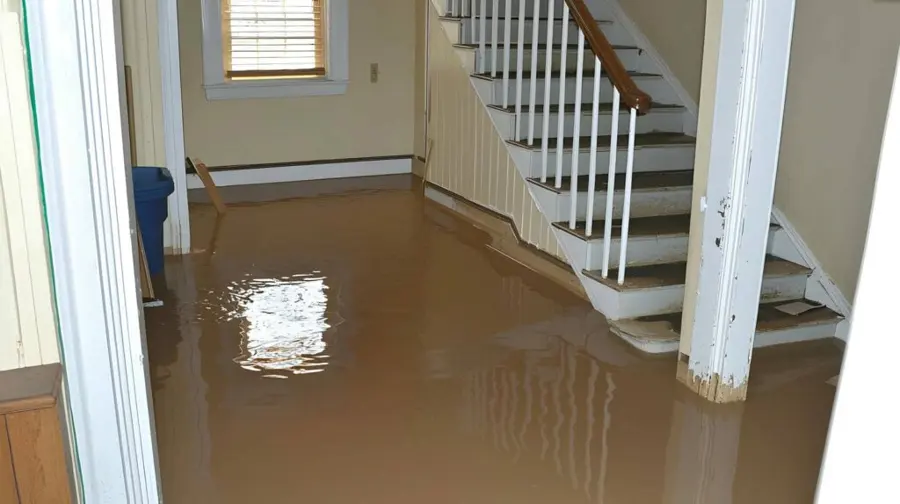
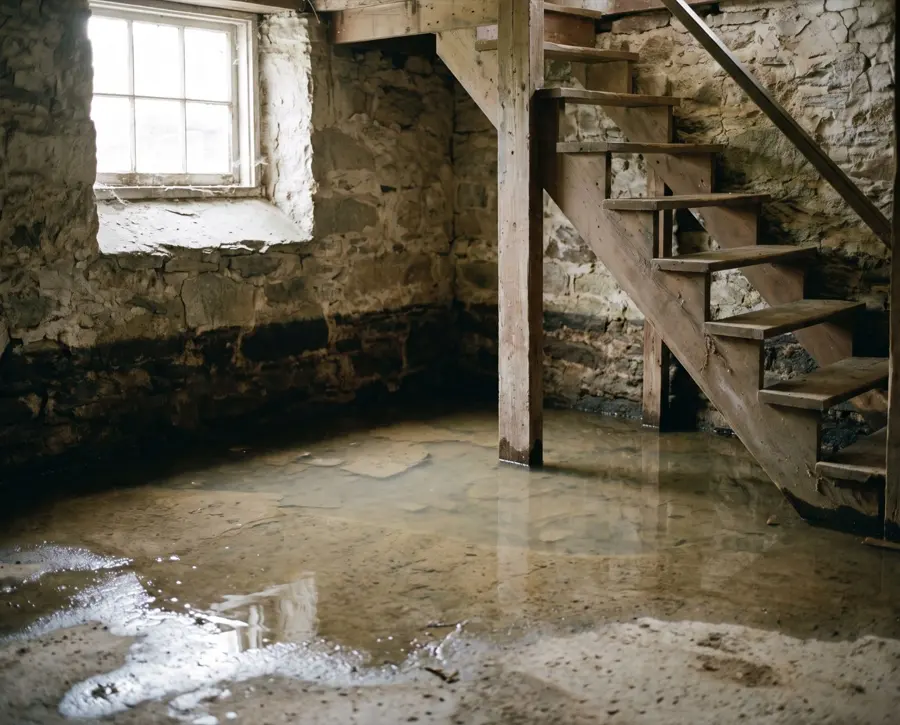 Basement Flooding CleanupWater across a basement floor from snowmelt, a pipe or a drain, pumped out and dried, old stone foundations included.Service details
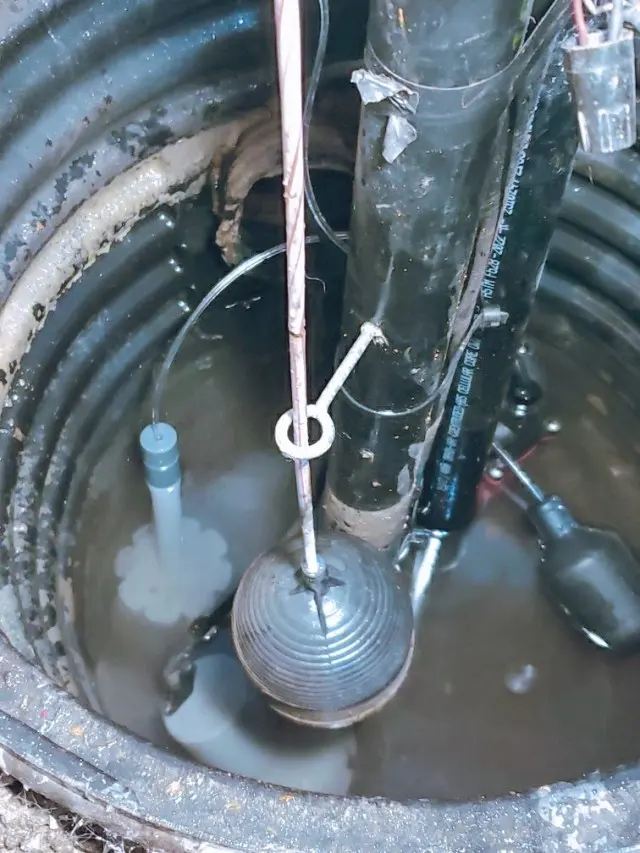 Sump Pump Failure CleanupA pump that quits in a storm or a power outage floods the basement fast. The pit overflow gets cleared and dried.Service details
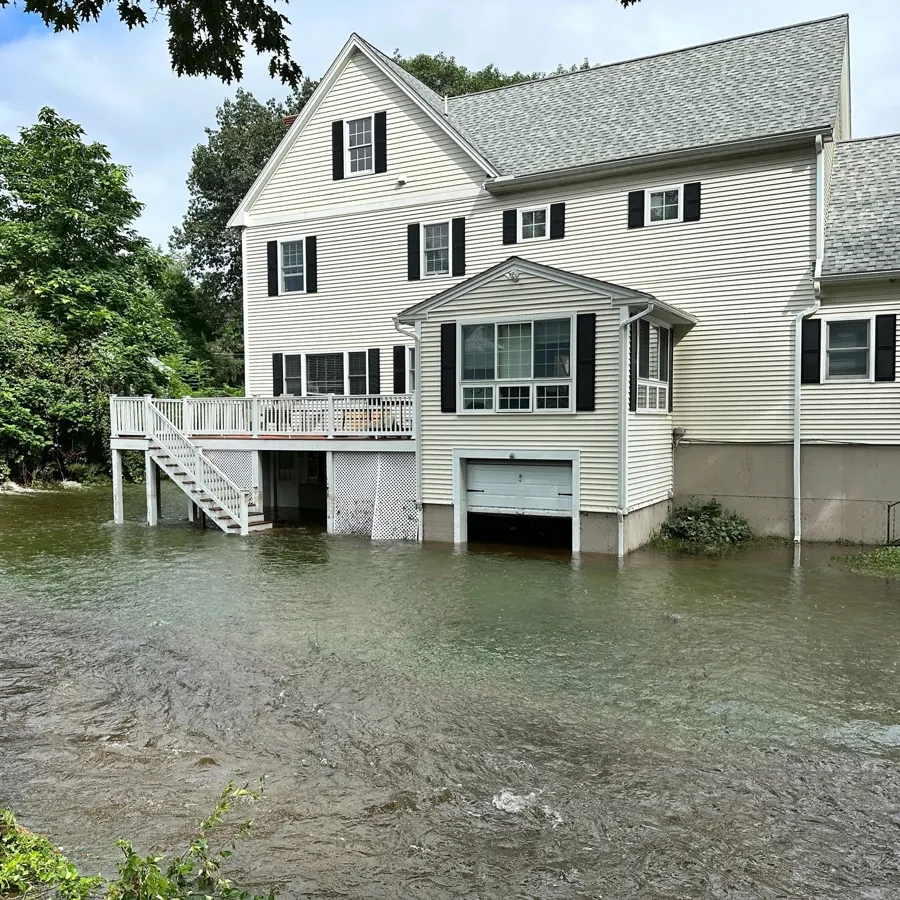 Flood Water CleanupRising river and surface water carries contaminants, so it is handled as Category 3: removal, cleaning and drying.Service details
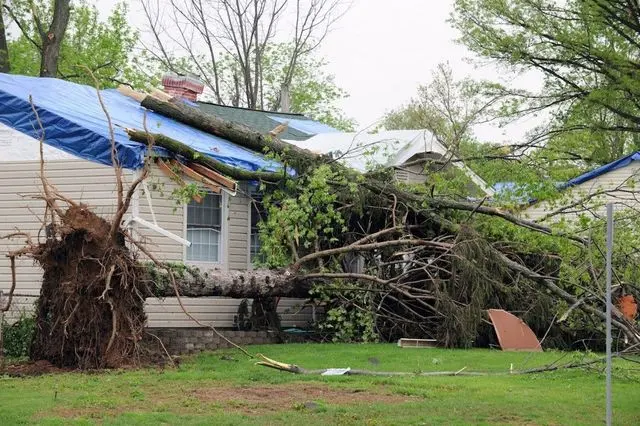 Storm Water DamageNor'easters and summer storms drive rain through windows, siding and doors, and a fallen tree can open the roof.Service details
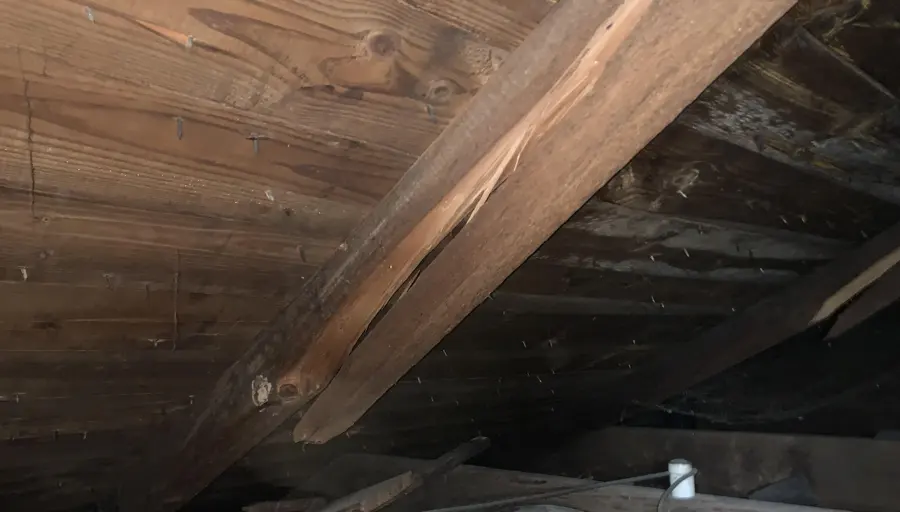 Roof Leak Water DamageShingle, flashing and chimney leaks soak attic insulation and ceilings. Wet insulation comes out and the structure dries.Service details
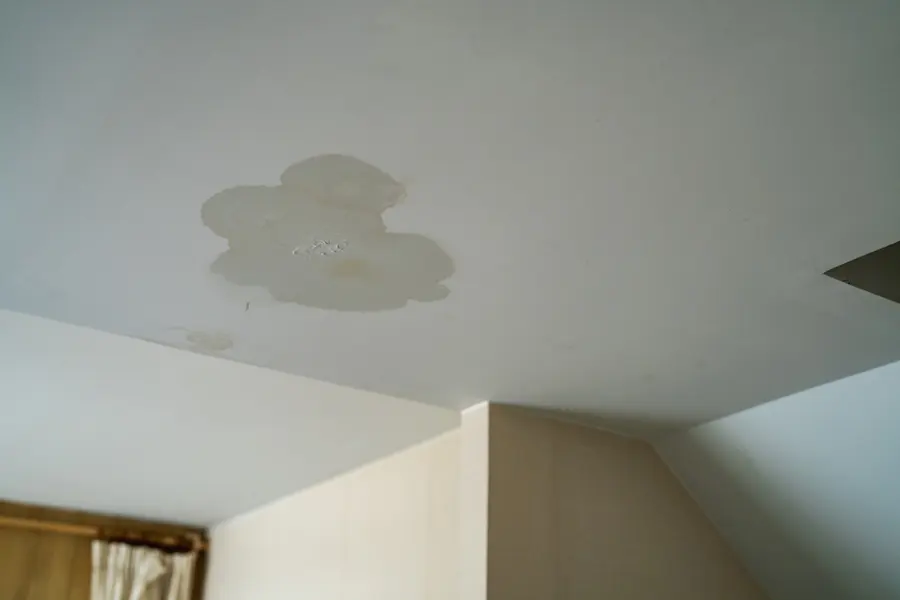 Ceiling Leak Water DamageA bath, toilet or supply pipe on the floor above leaks into the ceiling. The source is traced and the joist bays dried.Service details
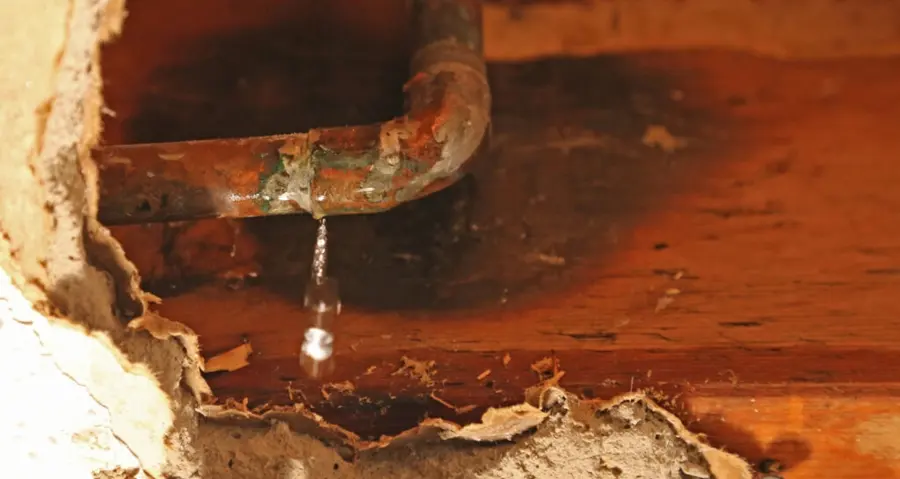 Burst Pipe Water DamageOld supply pipe or a failed fitting lets go inside a wall. The water comes out and the framing dries to a reading.Service details
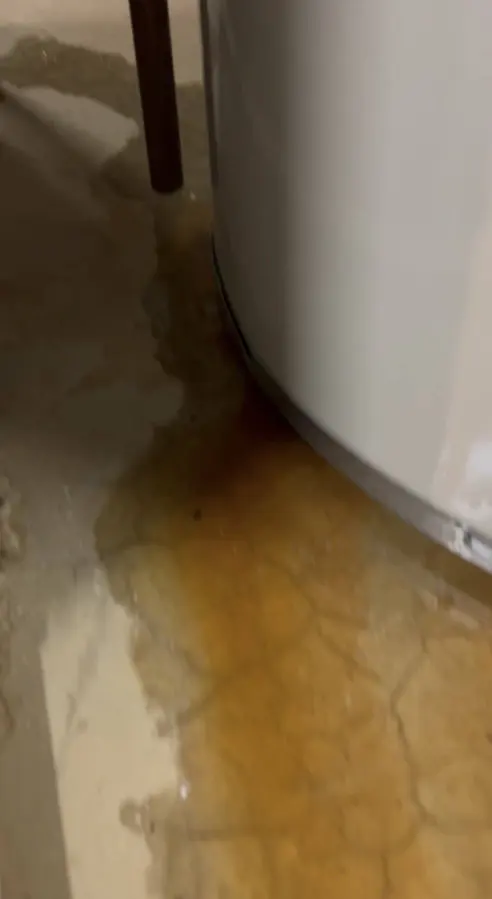 Water Heater Leak CleanupA tank or fitting failure floods a basement or closet. Stored items come up and the floor and framing dry.Service details
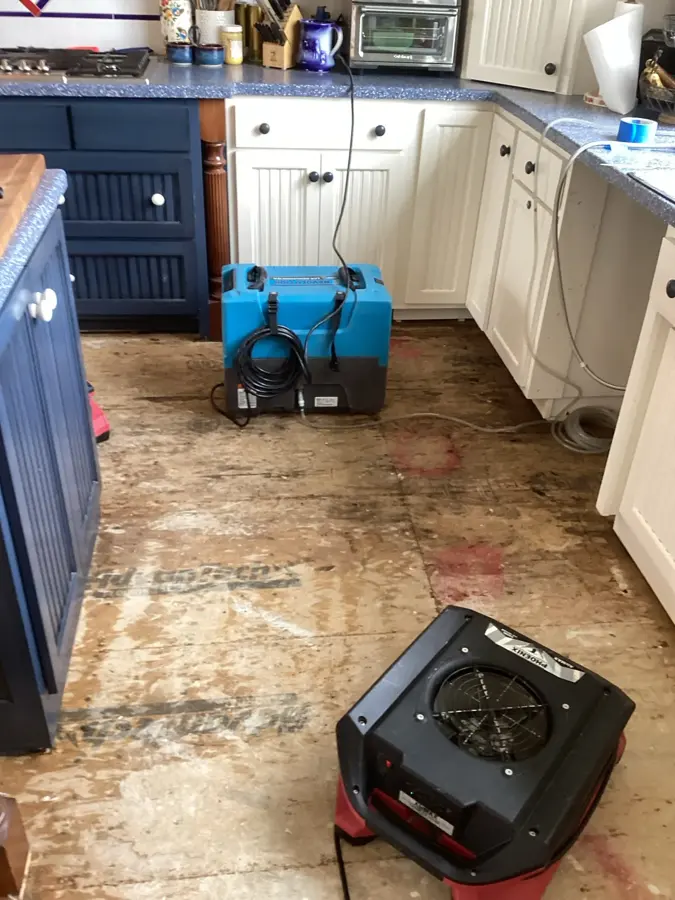 Appliance and Supply Hose LeaksWasher hoses, dishwashers and ice maker supplies leak slowly into floors and cabinets until the damage shows.Service details
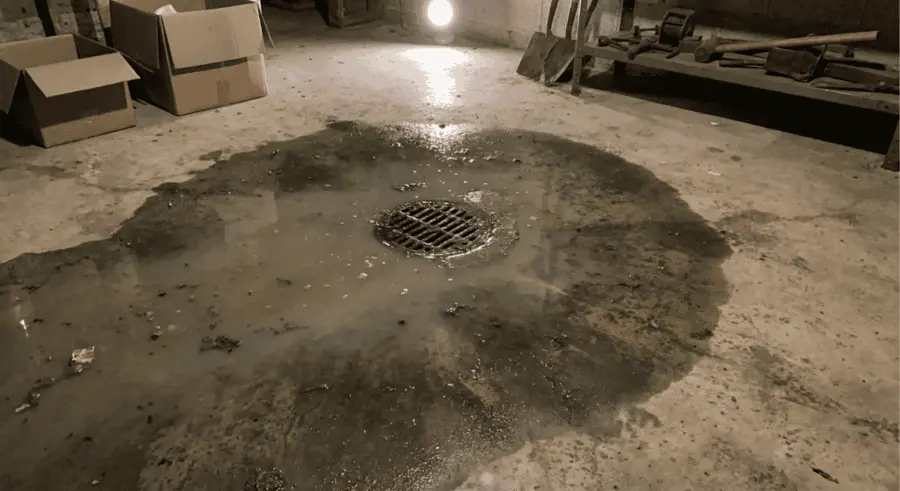 Sewage Backup CleanupFloor drain and toilet backups are Category 3 from the start. Porous materials come out and surfaces are treated.Service details
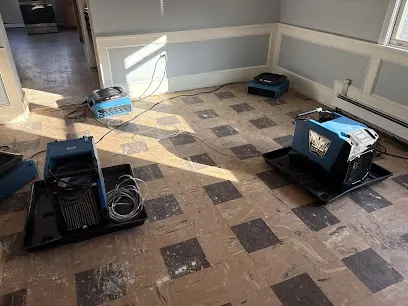
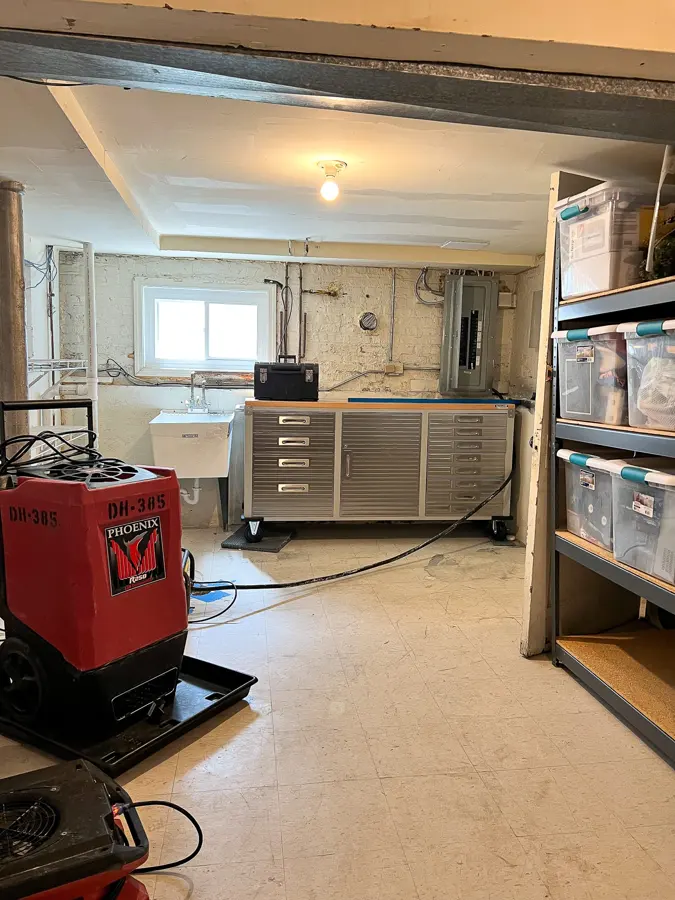 Structural Drying and DehumidificationAir movers and LGR dehumidifiers dry framing, subfloor and plaster to within 2 to 4 points of a dry reference.Service details
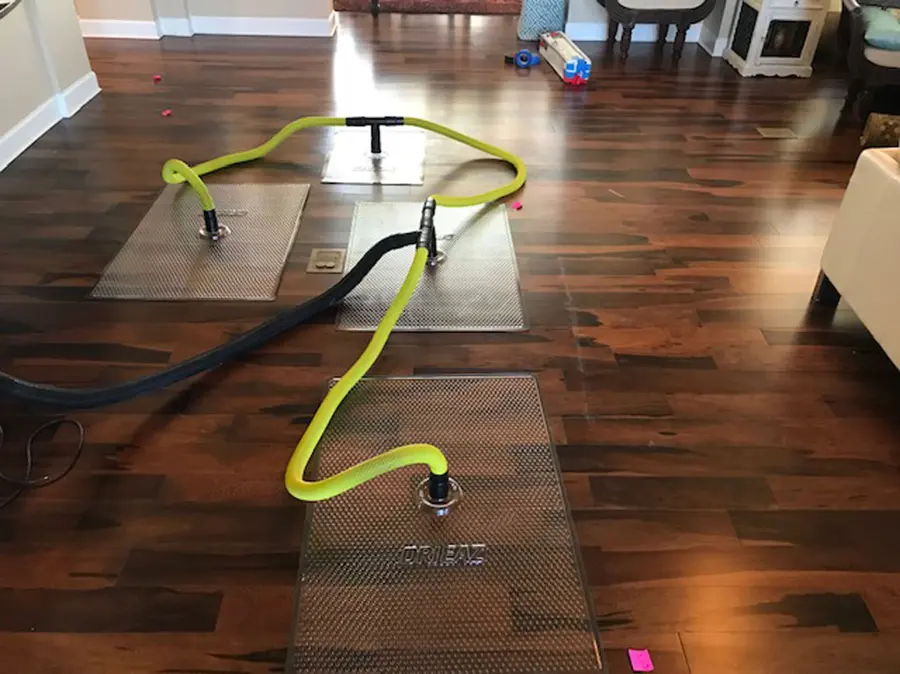 Hardwood Floor DryingFloor mats and panels pull water out of strip and plank floors while the boards can still be saved.Service details
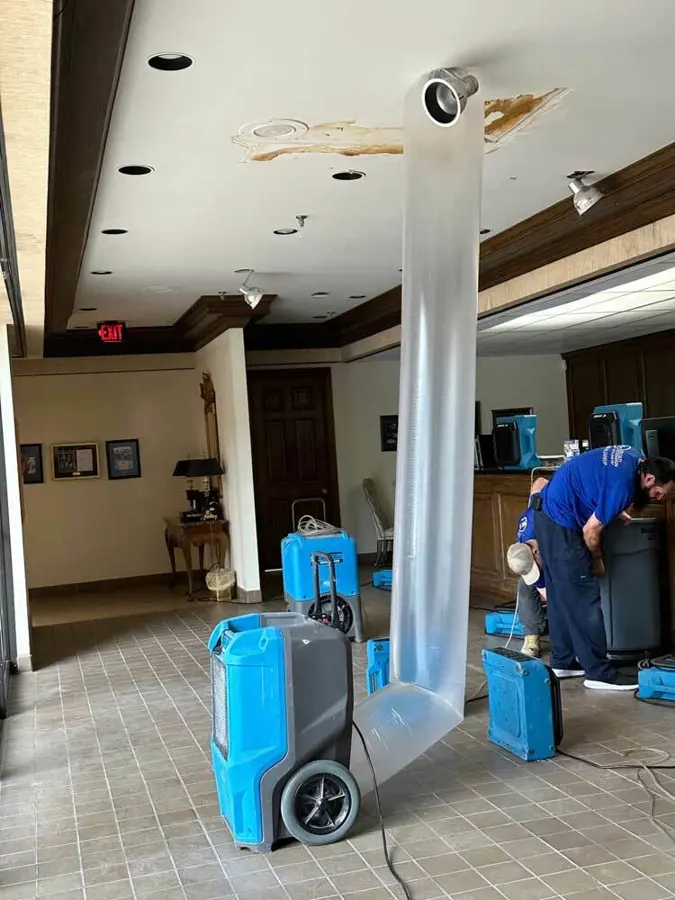 Commercial Water DamageOffices, shops, apartment buildings and public spaces dried in phases so the doors can stay open.Service details
What to do while the water is still moving
What happens before drying starts decides how much of the house can be saved instead of torn out. These five steps are safe for any homeowner to take right away.
Shut off the water at the main. The main valve usually sits where the water pipe enters through the basement wall. For a leaking water heater, close the cold supply valve on top of the tank.
Cut power to wet areas if it is safe. Switch off the breaker for flooded rooms from a dry spot. Never stand in water to reach the panel.
Move what you can off wet floors. Lift rugs, electronics and boxes onto a dry surface, and pull furniture away from wet carpet so it does not stain or swell.
Photograph everything before cleanup. Wide shots and close-ups of the water, the source and damaged items give the claim file a starting point.
Keep the heat on and the windows shut. In winter, heat keeps the rest of the pipes from freezing and helps the drying. Cold, damp air through open windows slows it down.
Do not let it sit overnight
Water soaks deeper into drywall, pad and framing every hour it sits, and mold can start growing within 24 to 48 hours. Extraction that starts early keeps more of the home.
(888) 670-6527Get the dry-out startedWater damage dried to the IICRC S500 standard
IICRC S500 is the industry drying standard. In practice that means structural drying, not surface drying: the equipment keeps running until every wet material reads within 2 to 4 points of a dry reference.
Inspect and map
The tech who does the walkthrough finds the source, sets the category of water and maps moisture with thermal imaging and pinless meters.
Extract and remove
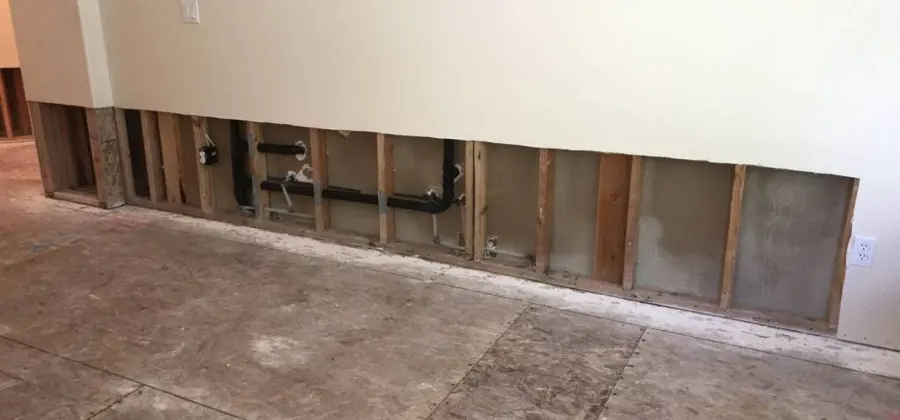
The extraction crew pulls standing water with truck-mounted units, then removes wet pad, baseboard or drywall that cannot be dried.
Dry and dehumidify
Air movers and LGR dehumidifiers are set to each room's evaporation load, with desiccants for dense materials such as plaster and hardwood.
Verify and document
Daily readings go into psychrometric drying logs, and the equipment comes out only when materials match the dry reference.
Water damage restoration across Concord and Merrimack County
Concord ZIP codes
One call reaches local water damage pros, 24/7
Dispatch covers the State House blocks on Main Street, the capes in the Heights and the older homes in Penacook, and active water is treated as urgent at any hour.
Give dispatch the street, the source if you know it and which level of the house is wet, so the right equipment comes on the first trip.
Concord, NH · [email protected]
Find us on GoogleSee every neighborhood and ZIP covered ›
Talk to a water damage proWhat a water damage dry-out looks like
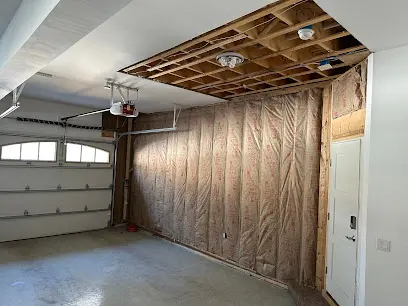
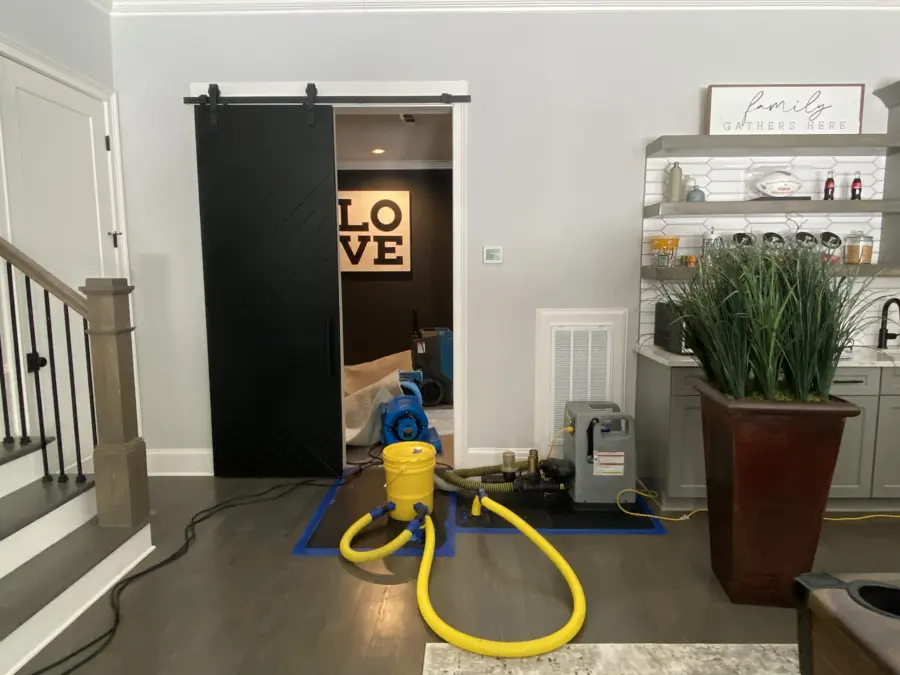
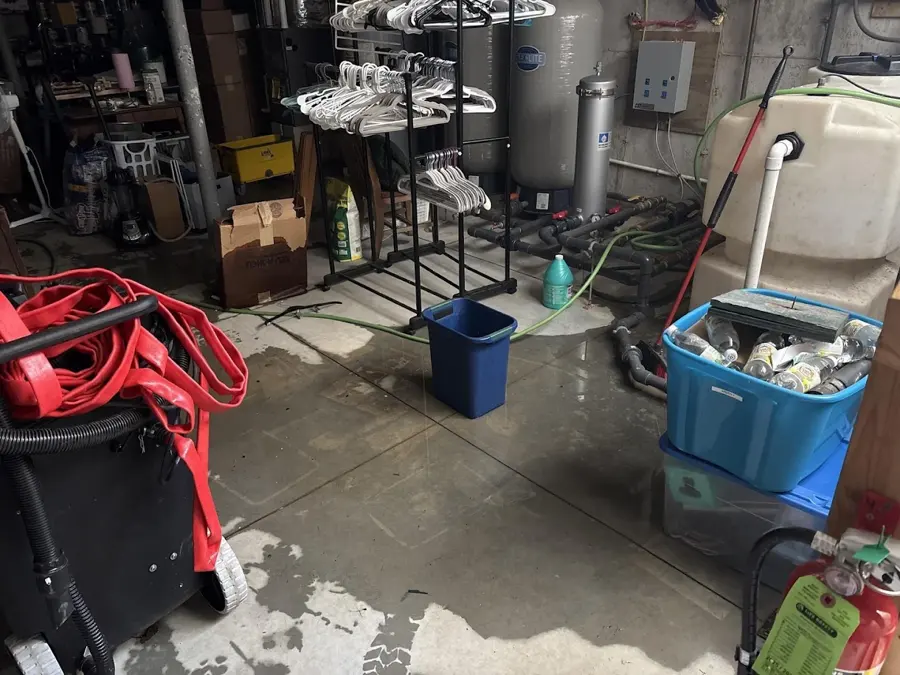
How a water loss is handled
Rapid local response
Dispatch runs around the clock across the city and nearby towns, and active water is treated as urgent at any hour, weekends and holidays included.
IICRC S500 drying standard
Structural drying, not surface drying. Category 1, 2 and 3 water are handled differently, and the class of loss sets how much equipment each room needs.
Claim-ready documentation
Moisture maps, daily psychrometric logs and timestamped photos taken before any demolition, with a line-item scope for the adjuster.
Local water know-how
Frozen pipes in January, ice dams after heavy snow, snowmelt through stone foundations in spring and Merrimack River flooding shape most local losses.
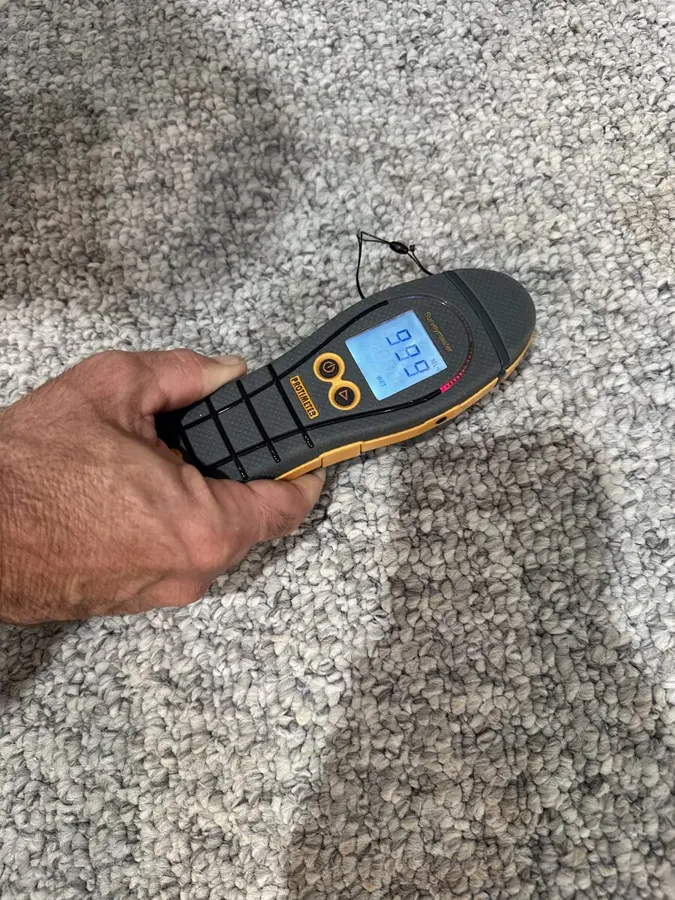
Readings, not guesses: the restoration team checks wet materials with pinless meters and thermal imaging, logs the numbers daily and leaves the equipment in place until the home reads dry.
All water damage categories covered
Clean water
Category 1 water comes from a clean source such as a supply pipe, a frozen pipe or a water heater. Caught early, most materials dry in place.
Frozen pipe cleanupGray water
Category 2 water carries contaminants, such as washer or dishwasher discharge or a sump overflow. Wet pad usually comes out and surfaces get an antimicrobial.
Appliance leak cleanupBlack water
Category 3 water includes sewage and rising flood water. Porous materials it touches are removed, not dried, and the work runs with containment and protective gear.
Sewage backup cleanupWhat does water damage restoration cost in Concord, NH?
Most water damage restoration in Concord, NH costs $1,200 to $9,000, and flood or sewage losses that reach a whole floor run $9,000 to $25,000 or more. Water category, square footage, material class and how fast drying started set the number.
- One room of clean water
- Extraction and in-place drying
- Three to five days of equipment
- Several rooms or a finished basement
- Pad, baseboard or drywall removal
- Gray water or a longer delay
- Flood water or a sewage backup
- Containment and porous material removal
- Whole-floor or multi-level losses
Ranges are typical, not a quote. For a closer number, run the water damage cost calculator, or see the ranges for basement flooding cleanup and frozen pipe water damage.
Documentation for your insurance claim
Adjusters pay on evidence. The restoration team builds the claim file from the first visit to the last reading, so the scope of the loss is clear and supported.
- A moisture map of every wet room, made before any equipment goes down
- Daily psychrometric drying logs with temperature, humidity and material readings
- Timestamped photos of the source and the damage, taken before demolition
- The water category and class of loss, recorded at the first visit
- A line-item scope of extraction, removal and drying for the adjuster
Check your own policy
A sudden, accidental leak such as a burst or frozen pipe is usually a homeowners claim. Rising river or surface water is flood damage, which standard homeowners policies exclude and a separate flood policy covers.
Sewer backup often needs its own endorsement. Coverage depends on your policy, so check with your own insurer before any work beyond emergency mitigation starts.
How water gets into Concord homes
The city sits on the Merrimack River with cold, snowy winters and an older housing stock: the median home dates to about 1969, and roughly a third were built before 1940. Each of those facts drives water damage here.
May 2006: The Mother's Day flood dropped more than 8 inches of rain in three days and pushed the Merrimack back over flood stage. The record crest still dates to March 1936.
Frozen pipes
January lows average in the teens and cold snaps drop below zero, so pipes in exterior walls, garages and unheated porches split.
Ice dams
Roughly 60 to 70 inches of snow a year melts on warm roofs and refreezes at the eaves, pushing water under the shingles.
Spring snowmelt
Melting snow and spring rain on frozen ground saturate the soil, and older stone and block foundations seep into basements.
River flooding
The Merrimack runs through the city, the Contoocook joins it at Penacook, and the Soucook and Turkey rivers rise with the same storms.
Aging plumbing
Older homes still carry galvanized supply pipe, cast iron drains and aging water heaters that fail without warning.
Power outages
Nor'easters and ice storms knock out power, and a sump pump without a battery backup stops when the basement needs it most.
Water damage questions from local homeowners
Water in your home right now?
Skip the reading and make the call. Dispatch for the city and nearby towns is open day and night.
(888) 670-6527 Ask about your water lossHow fast can water damage help reach my home?
Dispatch runs around the clock, and active water is treated as urgent at any hour, weekends and holidays included. Call as soon as you find the water, because the time before extraction starts decides how much can be dried in place.
What should I do before the restoration team arrives?
Shut off the main water valve, switch off power to wet rooms if you can do it from a dry spot, move valuables off the floor and photograph the damage. Keep the heat on in winter so other pipes do not freeze.
Does homeowners insurance cover water damage in New Hampshire?
A sudden, accidental leak such as a burst or frozen pipe is usually covered after the deductible. Flood water from a river or surface runoff needs a separate flood policy, and sewer backup often needs an endorsement. Coverage depends on your policy, so check with your own insurer.
Why do so many basements here take on water?
Snowmelt and spring rain saturate the ground while it is still frozen, older stone and block foundations let water through, and a sump pump that loses power in a storm cannot keep up. River flooding adds to it near the Merrimack and the Contoocook.
How long does drying take?
A contained Class 1 loss usually dries in three to five days when drying starts quickly. Plaster, hardwood and concrete take longer. The drying team leaves the equipment in place until readings match a dry reference, not until the surface feels dry.
What is the IICRC S500 standard?
IICRC S500 is the industry standard for water damage restoration. It covers how water categories and classes are assessed, how drying equipment is sized and how a structure is confirmed dry.
What is the difference between mitigation and repair?
Mitigation stops the damage from spreading: extraction, removal of materials that cannot be saved and structural drying. Repair puts the home back together afterward with new drywall, flooring and paint. Insurers usually treat the two as separate parts of a claim.
When does wet drywall have to come out?
Drywall soaked by clean water can often be dried in place if drying starts quickly. Drywall touched by flood water or sewage, or left wet long enough to swell and crumble, is cut out, usually a foot or two above the high-water mark.
Why is a sewage backup handled differently?
Sewage is Category 3 water from the moment it backs up. The mitigation team works with containment and protective gear, removes porous materials it touched and applies an EPA-registered antimicrobial before drying.
How is the cost of water damage restoration figured?
The scope follows the water category, the square footage that got wet, the materials involved and how long the water sat. Most contractors price the work with an Xactimate-style line-item scope, the same format adjusters use. The cost calculator gives a typical local range.
Water spreading in your home? Call before it reaches the framing.
Call Concord Water Damage Restoration for extraction, structural drying and the claim file, around the clock across the area.
(888) 670-6527Call dispatch before the framing soaks