Commercial Water Damage in Weare, NH
A water loss in a shop, office or school costs money every hour the space is closed. The crew extracts the water, phases the drying and keeps occupied areas open where it can.
(888) 670-6527Weare business water loss help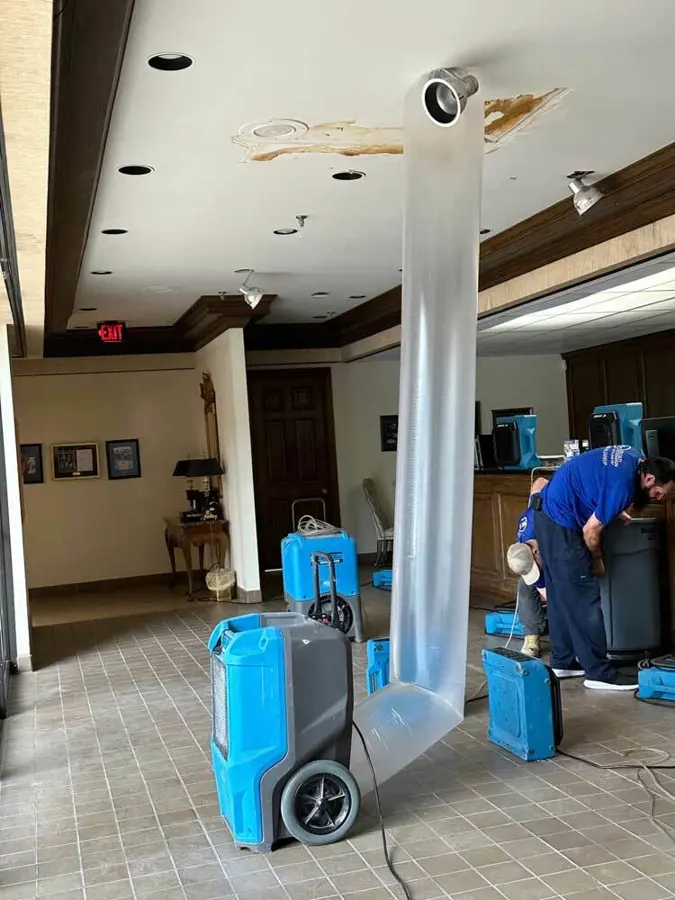
First steps for commercial water damage in Weare
Weare has Village, Commercial and Industrial zoning districts, and about 1,705 acres were zoned commercial in the town's 2005 master plan, roughly 300 of them industrial. Water losses in these buildings need a plan that keeps people working.
Make the area safe Turn off power to wet zones, cordon off slippery floors and keep staff and customers clear.
Shut off the source Close the supply valve, sprinkler zone valve or roof drain connection if it is safe and known.
Protect records and stock Move paper files, inventory and equipment off wet floors, and photograph what is damaged.
Notify the manager Tell the owner or property manager, then call so extraction and a drying plan can start.
Business still open?
The crew can contain the wet area, run equipment after hours and shift work between zones so customers or staff keep using the dry parts of the building.
(888) 670-6527Ask about phased dryingHow the Weare restoration team handles commercial water damage
Rapid local response
Dispatch runs around the clock, and active water is treated as urgent at any hour, weekends and holidays included.
IICRC S500 drying standard
Structural drying, not surface drying: air movers and LGR dehumidifiers sized to the class of loss, checked with daily readings.
Claim-ready documentation
Moisture maps, daily psychrometric logs and timestamped photos taken before any demolition go into the claim file.
Cold-climate know-how
Frozen pipes, ice dams, snowmelt in older stone basements and spring river flooding set how a home here gets wet.
What does commercial water damage cost in Weare, NH?
Commercial water damage costs about $4,000 to $250,000, driven by square footage, number of units and the building systems affected. A single suite or storefront is the low end, and building-wide losses cost the most.
- One shop, office or unit
- Extraction, then phased drying
- Work after business hours
- Water across a floor or below
- Containment between tenants
- Large-loss dehumidification
- Sprinkler or roof failures
- Multiple crews and phases
- Detailed commercial claim file
Documentation for your insurance claim
The restoration team builds the claim file: a moisture map, daily drying logs, timestamped photos before demolition and a line-item scope. A sudden pipe or appliance leak is usually a homeowners claim; rising flood water usually needs a flood policy. Coverage depends on your policy, so check with your own insurer.
Ranges are typical, not a quote: water category, square footage, material class and how fast drying started move the number most. Run the water damage cost calculator for a closer range.
How commercial water damage is handled in Weare
The tech who does the walkthrough maps moisture before any equipment goes down, so the drying plan matches what is actually wet. Equipment stays until the readings say dry, not until it looks dry.
Assess and contain
The crew maps the wet area, isolates it and protects occupied space.
Extract and remove
Water is extracted, and wet ceilings, insulation and flooring are removed in stages.
Dry in phases
Large dehumidifiers and air movers run by zone, with work scheduled around the business.
Document and close
A detailed claim file and dry readings support the reopening and the insurer.
Where commercial losses start
Sprinkler heads, roof drains, supply pipes and rooftop units can all release water onto floors that sit above occupied space. Schools and municipal buildings add their own risks, from restroom fixtures to boilers.
- Sprinkler discharge above ceilings
- Roof drain or rooftop unit overflow
- Restroom and kitchen supply failures
- Boiler and heating system leaks
Phased drying that keeps doors open
The crew isolates the wet zone with containment, extracts the water and sets equipment where it does the least harm to operations. Work moves after hours or in stages so a shop, office or classroom can reopen sooner. A written phasing plan tells managers which areas return to use first and when each zone is expected to read dry.
Documenting the loss
Commercial claims need more than photos. A scope lists each room, material and piece of equipment, along with moisture logs and daily notes, so a property manager or insurer can review the whole loss. Business interruption coverage may apply, and clear records help.
- Room by room scope of work
- Daily moisture and equipment logs
- Photos with dates and locations
Older buildings and mixed use
Mill-era village buildings have heavy timbers and brick that dry slowly, and shared walls carry water between units. Commercial water damage in Concord explains the same approach, and structural drying covers dense materials.
Commercial water damage across Weare and nearby towns
Commercial water damage work covers the Village, Commercial and Industrial districts, including businesses along Route 114 and Route 77, along with schools, municipal buildings and the older village buildings around Chase Village and Riverdale.
The same service nearby: commercial water damage in Concord, Hopkinton, Bow.
Related water damage services in Weare
Commercial Water Damage questions in Weare, NH
Water still spreading?
Water loss at a business? Describe the space and the team will plan the extraction and the phasing.
(888) 670-6527 Request commercial dryingCan the business stay open during drying?
Often partly. Containment separates the wet zone, and equipment can be placed so the rest of the space keeps working. A loud or large loss may need a short closure.
How long does commercial drying take?
A suite may dry in several days, while a floor or building takes longer. Readings by zone decide when each area is cleared.
Does business insurance cover water damage?
Commercial property policies often cover sudden water damage, and business interruption coverage may add lost income. The wording matters, so share the policy with the adjuster early.
Who handles a landlord and tenant loss?
The lease and each party's policy decide who files. The crew documents the loss by unit so a landlord and tenants can each present their part.
What about sprinkler discharge?
Sprinkler water is usually clean at first but can darken as it crosses ceiling dust and insulation. Wet ceiling tiles and insulation are removed quickly.
Dry the building while the business keeps moving
Containment, phased drying and a detailed file keep a loss from becoming a closure.
(888) 670-6527Call about the business loss