Commercial Water Damage in Bow, NH
Shops, offices and industrial users in Bow cannot stop work for long. The crew phases the drying, contains the wet areas and keeps a detailed file so the claim moves along while the business keeps running.
(888) 670-6527Bow business water loss help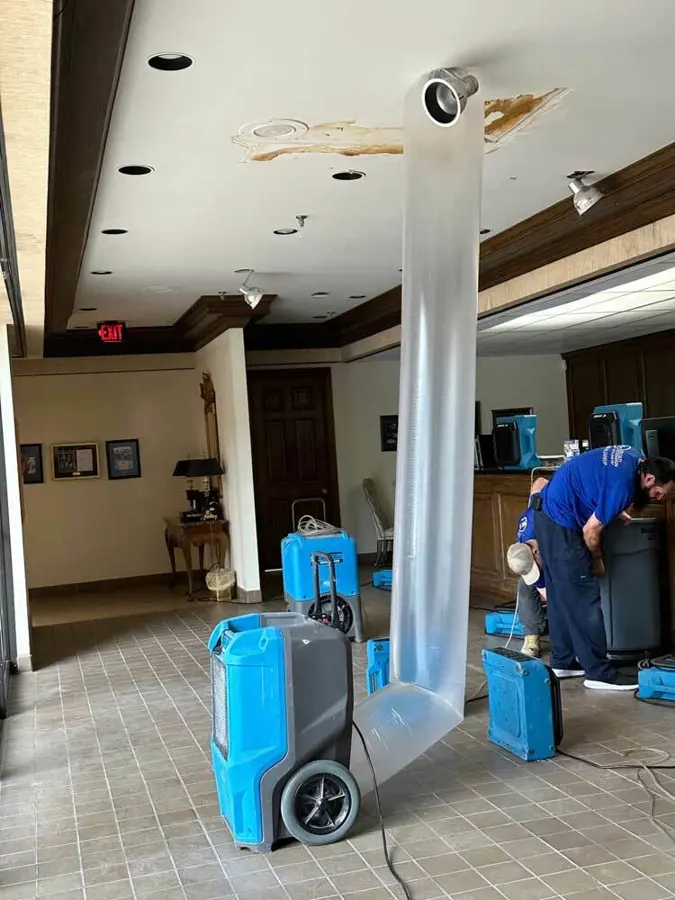
First steps for commercial water damage in Bow
A water loss in a business is also a loss of working time, so the plan covers drying, access and documentation together. Commercial work is phased so part of the building can keep operating while another part dries.
Make the area safe Shut off the water source, cut power to wet zones and keep staff and customers out of slippery or wet areas.
Protect inventory Lift stock, files and equipment off the floor and cover what cannot be moved, with photos of everything.
Notify the carrier Call the insurer and the property manager early, and describe the source, the area and the business impact.
Describe the building Tell the crew the floor area, the flooring types and whether tenants share the space.
Keeping the business open
Many jobs can run in phases so part of the space stays in use. Ask how containment and noisy work can be scheduled around hours of operation.
(888) 670-6527Ask about phased dryingHow the Bow restoration team handles commercial water damage
Rapid local response
Dispatch runs around the clock, and active water is treated as urgent at any hour, weekends and holidays included.
IICRC S500 drying standard
Structural drying, not surface drying: air movers and LGR dehumidifiers sized to the class of loss, checked with daily readings.
Claim-ready documentation
Moisture maps, daily psychrometric logs and timestamped photos taken before any demolition go into the claim file.
Cold-climate know-how
Frozen pipes, ice dams, snowmelt in older stone basements and spring river flooding set how a home here gets wet.
What does commercial water damage cost in Bow, NH?
Commercial water damage runs from $4,000 for one suite or storefront to $250,000 for a building-wide loss. Floor area, the number of occupied zones and the carrier's documentation needs drive the cost, along with after-hours scheduling.
- One office, shop or unit
- Extraction and phased drying
- After-hours scheduling
- Water across a floor or units below
- Containment between occupied areas
- Large-loss dehumidification
- Sprinkler or roof failures over floors
- Multiple crews and phases
- Detailed commercial claim file
Documentation for your insurance claim
The restoration team builds the claim file: a moisture map, daily drying logs, timestamped photos before demolition and a line-item scope. A sudden pipe or appliance leak is usually a homeowners claim; rising flood water usually needs a flood policy. Coverage depends on your policy, so check with your own insurer.
Ranges are typical, not a quote: water category, square footage, material class and how fast drying started move the number most. Run the water damage cost calculator for a closer range.
How commercial water damage is handled in Bow
The tech who does the walkthrough maps moisture before any equipment goes down, so the drying plan matches what is actually wet. Equipment stays until the readings say dry, not until it looks dry.
Assess and zone
The team walks the property, marks wet zones and sets containment with the manager.
Extract and protect
Standing water is removed and inventory and equipment are protected or relocated.
Dry in phases
Large-loss equipment dries each zone in turn, keeping occupied areas working.
Document the file
Photos, readings and zone logs are assembled for the owner, manager and carrier.
Local exposure
Businesses around Bow Junction are exposed to Turkey River flooding and to backup and runoff from the Merrimack River, with sheet runoff coming off Interstate 89 and Interstate 93. The 2006 hazard count also found 43 non-residential buildings in or next to the floodplain.
- Dealership lots and showrooms near the interchange
- Industrial users with large floor areas
- Offices and storefronts on commercial streets
- Shop and warehouse floors with drains
Industrial areas along Route 3A
The Business Development District along Route 3A holds several large industrial areas, and the town water system serves the commercial and industrial zone around Dunklee Road, Johnson Road, River Road, Route 3A and Vaughn Road. Supply failures and sprinkler leaks in big buildings call for large-loss equipment and several crews.
How commercial jobs run
The crew meets the manager, marks zones, sets containment and schedules noisy work after hours where possible. Large floors get truck-mounted extraction, desiccant dehumidifiers and several drying phases, with daily readings in a file the insurer can follow.
- Containment between occupied and wet areas
- Phased drying that protects operations
- Business interruption notes for the insurer
Claim paperwork
Commercial claims often involve a property manager, an owner and a carrier, so the file holds dated photos, moisture maps, equipment logs and a scope each party can read. FEMA publishes business recovery information, and the National Weather Service records storm dates. See flood water cleanup for river events.
Commercial water damage across Bow and nearby towns
Commercial work covers businesses around the interstate interchange, along Route 3A and the River Road corridor, and in the industrial and mixed-use areas away from the residential streets.
The same service nearby: commercial water damage in Concord, Pembroke, Hooksett.
Related water damage services in Bow
Commercial Water Damage questions in Bow, NH
Water still spreading?
A pipe, roof or sprinkler failure in your building? Describe the area and the team phases the work.
(888) 670-6527 Ask about the buildingCan my business stay open during drying?
Often yes in part. Containment and phased work let unaffected areas keep operating, though noise and equipment placement need planning with the crew.
How is commercial drying different from residential?
Large floors, high ceilings and concrete need bigger equipment and more crews, and the file needs to satisfy owners, tenants and carriers at once.
Does a sprinkler leak count as a water loss?
Yes. Sprinkler and supply failures can release large volumes quickly, and the response is the same as for any other source: extraction, drying and a detailed record for the carrier.
Who coordinates with the insurance carrier?
The business owner or manager contacts the carrier, and the crew supplies documentation. Moisture logs and photos help the adjuster verify scope.
Can floors and ceilings in large buildings be saved?
Often yes if the water was clean. Concrete and metal decking tolerate drying well, while ceiling tiles, insulation and carpet often come out.
Downtime adds to the cost of a business water loss
Tell the team the building type, the wet areas and the occupants.
(888) 670-6527Plan the commercial dry-out