Hardwood Floor Drying in Pembroke, NH
Wet hardwood swells, cups and eventually buckles, but boards caught early can often be saved. The drying team in Pembroke uses mats, panels and dehumidifiers to pull moisture from the boards and the subfloor beneath.
(888) 670-6527Ask about saving wet floors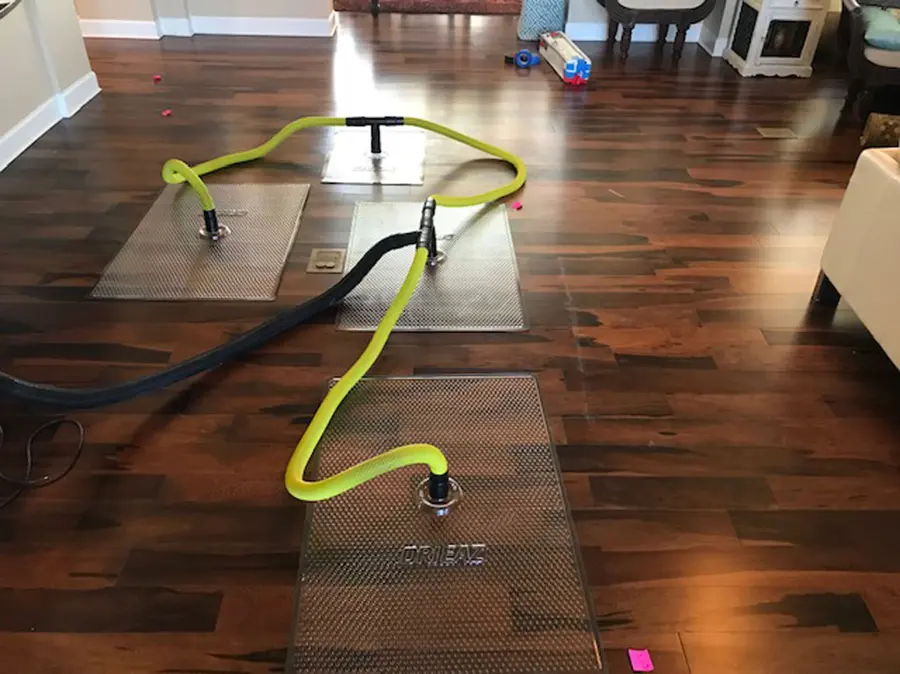
First steps for hardwood floor drying in Pembroke
Wood and water have a complicated relationship. Boards swell as they absorb moisture, edges lift into a cup or a crown, and a floor that stays wet long enough buckles off the subfloor and cannot be saved.
Mop the standing water Soak up puddles with towels or a wet vacuum before the boards take on more water.
Lift furniture Take rugs and furniture off the floor, and set legs on foil or plastic so stains do not spread.
Skip the heater Do not aim a space heater or hair dryer at boards, which can dry the surface too fast and crack the finish.
Photograph the floor Take pictures of the water, the cupping and the finish for the claim, with the date.
Act before it cups
Wet boards start to move within a day or two. Extraction and floor drying started early give the best chance to save the floor.
(888) 670-6527Ask about saving the floorHow the Pembroke restoration team handles hardwood floor drying
Rapid local response
Dispatch runs around the clock, and active water is treated as urgent at any hour, weekends and holidays included.
IICRC S500 drying standard
Structural drying, not surface drying: air movers and LGR dehumidifiers sized to the class of loss, checked with daily readings.
Claim-ready documentation
Moisture maps, daily psychrometric logs and timestamped photos taken before any demolition go into the claim file.
Cold-climate know-how
Frozen pipes, ice dams, snowmelt in older stone basements and spring river flooding set how a home here gets wet.
What does hardwood floor drying cost in Pembroke, NH?
Hardwood floor drying runs $1,500 to $3,500 for one room, and $3,500 to $8,000 across several rooms. Buckled boards with subfloor removal and extended drying before refinishing can reach $18,000.
- Water caught within a day
- Mats and a dehumidifier
- Wood readings logged daily
- Wet boards across a level
- Mats, panels and air movers
- Subfloor drying
- Buckled or contaminated boards
- Boards pulled for subfloor drying
- Extended drying before refinishing
Documentation for your insurance claim
The restoration team builds the claim file: a moisture map, daily drying logs, timestamped photos before demolition and a line-item scope. A sudden pipe or appliance leak is usually a homeowners claim; rising flood water usually needs a flood policy. Coverage depends on your policy, so check with your own insurer.
Ranges are typical, not a quote: water category, square footage, material class and how fast drying started move the number most. Run the water damage cost calculator for a closer range.
How hardwood floor drying is handled in Pembroke
The tech who does the walkthrough maps moisture before any equipment goes down, so the drying plan matches what is actually wet. Equipment stays until the readings say dry, not until it looks dry.
Read the boards
Moisture meters check wood and subfloor, and a thermal imaging camera shows where water traveled under the finish.
Extract and set up
Water is removed from the surface, then mats or panels, air movers and dehumidifiers are placed over the wet area.
Adjust and monitor
Wood readings are taken daily, and equipment is moved or removed as the floor dries.
Decide on repair
The team reports whether the boards can be sanded and refinished or need partial replacement.
Why wet hardwood moves
Wood takes on moisture from the bottom first, so water that reaches the subfloor wets the underside of the boards before the surface shows anything. The boards expand, press against each other and lift, which is why a floor can look fine the day of a leak and be cupped a week later.
- Cupping: edges higher than the center
- Crowning: center higher than the edges
- Buckling: boards lift from the subfloor
- Gapping as boards shrink after drying
What drying a floor involves
Standing water is extracted first, then the boards are dried in place with floor mats or panels that pull moisture from the surface while dehumidifiers dry the air. Small holes or removed baseboards let air reach the space under the boards. Wood moisture meters are read each day to steer the equipment.
When boards have to come out
Floors wet by contaminated water, or boards already buckled, usually cannot be dried flat and are removed so the subfloor can dry. Pulling a few boards can also relieve pressure and prevent damage to the rest. Removing some boards is often better than waiting for the whole floor to warp.
- Black water or sewage contact
- Boards already lifting off the subfloor
- Finish or glue failing on engineered wood
Refinishing after the floor is dry
Boards that cupped slightly often flatten as they dry and can be sanded and refinished once readings are normal. Waiting for full dryness matters, since refinishing wet wood traps moisture and fails later. Related drying work is explained in structural drying and appliance leak water damage.
Hardwood floor drying across Pembroke and nearby towns
Floor drying covers homes from Suncook Village and the Buck Street area to the Academy Road area, the Brickett Hill Road area and houses along Pinewood Road and Sheep Davis Road.
The same service nearby: hardwood floor drying in Concord, Bow, Hooksett.
Hardwood Floor Drying questions in Pembroke, NH
Water still spreading?
Wet wood floor after a leak? Describe it and the drying team will advise.
(888) 670-6527 Ask about my floorCan a cupped hardwood floor go flat again?
Often yes, if it is dried slowly and thoroughly. Boards that cupped slightly flatten as moisture drops, though some need sanding.
How long does hardwood drying take?
Several days to a few weeks, depending on how wet the boards got and how thick they are. Daily wood readings, not the calendar, decide when it is done.
Is engineered flooring different?
Engineered boards have glued layers that can separate when wet, so they are less forgiving than solid wood and more likely to need replacement.
Will insurance pay to replace the floor?
A sudden leak is often covered, though policies differ on flooring and finishes. Moisture logs, photos and the plumber's repair record support the claim.
Can the floor be sanded before it is dry?
No. Sanding and finishing over damp boards traps moisture and leads to cupping and finish failure later, so refinishing waits for dry readings.
Save the boards in your Pembroke home before they cup or buckle
Mats, meters and readings give wet hardwood its best chance.
(888) 670-6527Plan floor drying