Hardwood Floor Drying in Hooksett, NH
Wet hardwood swells, cups and buckles when water sits in the boards. The drying team uses mats, panels and dehumidifiers to pull moisture out quickly, often saving a floor that looks ruined in Hooksett.
(888) 670-6527Get floor drying help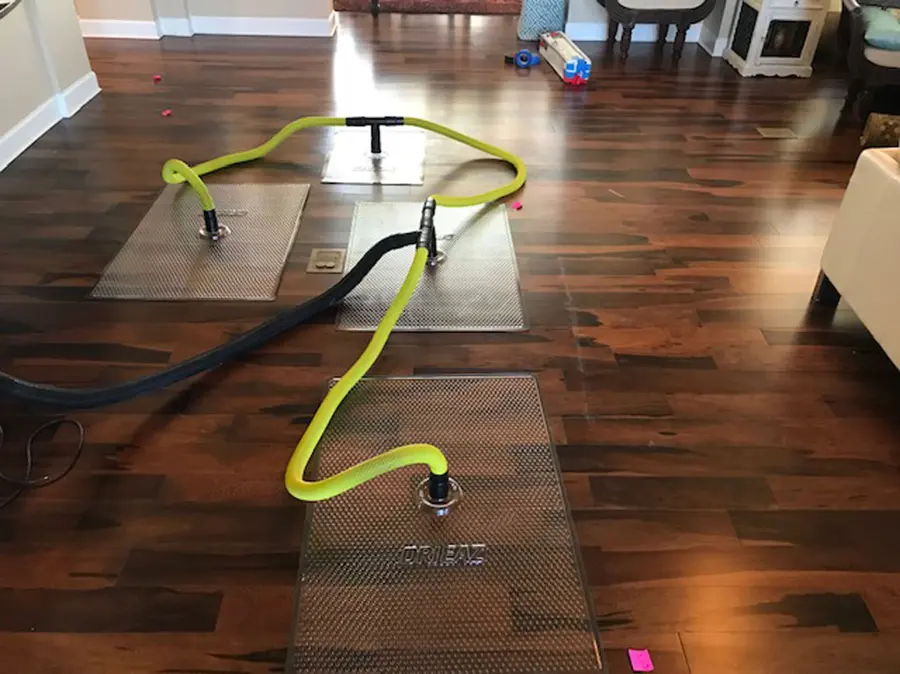
First steps for hardwood floor drying in Hooksett
Hardwood is one of the few floors that can come back from a soaking, but only if the water comes out quickly and the boards dry evenly. Left alone, wet boards swell against each other, lift off the subfloor and may not flatten again.
Lift standing water Mop or extract what is on the surface, and lift rugs and furniture legs off the wood.
Skip the heat Do not run a heater at the boards or open all windows on a humid day. Uneven drying splits wood.
Leave the boards down Do not pull up boards or scrape the floor. Controlled drying works best when the floor is intact.
Photograph the floor Take pictures of the water, the cupping and the wet edges, since the floor shape can change in days.
Water on the hardwood?
Tell the crew how long the water sat and what kind of floor it is. A floor caught within a day has the best chance to be dried instead of replaced.
(888) 670-6527Describe the wet floorHow the Hooksett restoration team handles hardwood floor drying
Rapid local response
Dispatch runs around the clock, and active water is treated as urgent at any hour, weekends and holidays included.
IICRC S500 drying standard
Structural drying, not surface drying: air movers and LGR dehumidifiers sized to the class of loss, checked with daily readings.
Claim-ready documentation
Moisture maps, daily psychrometric logs and timestamped photos taken before any demolition go into the claim file.
Cold-climate know-how
Frozen pipes, ice dams, snowmelt in older stone basements and spring river flooding set how a home here gets wet.
What does hardwood floor drying cost in Hooksett, NH?
Hardwood floor drying runs $1,500 to $3,500 for one room, $3,500 to $8,000 for several rooms and $8,000 to $18,000 when boards are removed for subfloor drying.
- Wet for less than a day
- Drying mats and a dehumidifier
- Wood readings every day
- Flooring wet across rooms
- Mats, panels and air movers
- Subfloor dried too
- Buckled or tainted boards
- Boards pulled to dry the subfloor
- Long drying before refinishing
Documentation for your insurance claim
The restoration team builds the claim file: a moisture map, daily drying logs, timestamped photos before demolition and a line-item scope. A sudden pipe or appliance leak is usually a homeowners claim; rising flood water usually needs a flood policy. Coverage depends on your policy, so check with your own insurer.
Ranges are typical, not a quote: water category, square footage, material class and how fast drying started move the number most. Run the water damage cost calculator for a closer range.
How hardwood floor drying is handled in Hooksett
The tech who does the walkthrough maps moisture before any equipment goes down, so the drying plan matches what is actually wet. Equipment stays until the readings say dry, not until it looks dry.
Test the floor
Moisture meters check the boards and the subfloor to see how far the water spread and how deep it went.
Set the mats
Drying mats and panels go down over the wet area, connected to vacuum units that draw moisture out of the wood.
Dehumidify the room
Dehumidifiers hold the air dry and moderate heat keeps the drying even, with readings every day.
Decide save or remove
When readings stall or boards stay deformed, affected boards are pulled and the subfloor is dried before refinishing.
How wet wood changes shape
Boards absorb water from below and from the edges, so the underside swells first and the board cups with its edges up. If the whole floor swells, the boards push together and the surface can crown or buckle off the subfloor.
- Cupping: edges rise higher than the center
- Crowning: the center rises above the edges
- Buckling: boards lift away from the subfloor
- Staining and darkening from long exposure
Mats, panels and controlled drying
Drying mats sit on the floor and pull moisture up through the boards by vacuum while dehumidifiers dry the air above. Panels or injection systems reach under tight floors, and heat is kept moderate so the wood dries evenly instead of splitting.
When boards have to be removed
A floor that has soaked for days, or taken contaminated water, may not dry flat. In that case a few boards are pulled so the subfloor can dry, or the whole floor comes out when gray or black water was involved. Readings taken each day show which path the floor is on.
- Boards removed for subfloor access
- Contaminated flooring discarded, not dried
- Daily moisture readings that decide the path
Refinishing after drying
Once the wood reads dry and has settled, a flooring contractor can sand and refinish it, since many mild cups flatten on their own. Water that reached the floor from above is covered under ceiling leak water damage, and wider drying under structural drying and dehumidification.
Hardwood floor drying across Hooksett and nearby towns
Hardwood drying covers homes with wood floors across the Village, Granite Hill, Campbell Hill and University Heights, along with Hackett Hill and Martins Corner, from single rooms to whole first floors.
The same service nearby: hardwood floor drying in Concord, Bow, Pembroke.
Hardwood Floor Drying questions in Hooksett, NH
Water still spreading?
Water on the hardwood and the boards starting to lift? Describe the floor and how long it sat.
(888) 670-6527 Ask about wet hardwoodCan a water-damaged hardwood floor really be saved?
Often, when drying starts within a day or two and the water was clean. Longer exposure, flood water or sewage usually means replacement.
Why do the boards cup after a leak?
Water enters from below and the edges, swelling the underside first. The board bends upward at its edges until it dries and may flatten once it does.
How long does hardwood take to dry?
Typically five to ten days with mats and dehumidifiers, longer for thick or engineered boards. Daily readings show when it is done.
Will insurance pay for refinishing?
Many policies cover sudden water damage, including refinishing or replacement of damaged flooring. A drying log shows what was done to limit the loss.
Does engineered flooring dry the same way?
It can, but the layers can delaminate if soaked, so it is judged case by case. Solid hardwood has the best record for drying and refinishing.
Should the finish be sanded right away?
No. Wait until the wood reads dry and stable. Sanding too soon can trap moisture and leave a floor that cups again.
Dry the boards before they cup for good
Mats and dehumidifiers pull moisture out while readings track the floor.
(888) 670-6527Start hardwood drying