Structural Drying and Dehumidification in Pembroke, NH
Surface dry is not structure dry. The drying team in Pembroke uses air movers, dehumidifiers and daily moisture readings to bring walls, floors and framing back to normal in older houses and brick buildings.
(888) 670-6527Plan the drying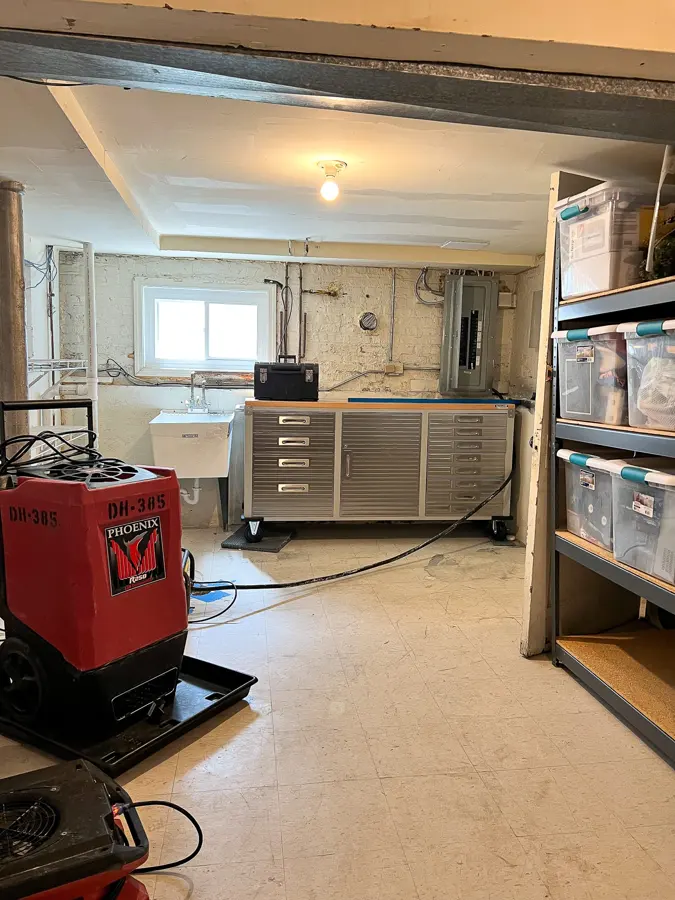
First steps for structural drying and dehumidification in Pembroke
Drying a building is a physics problem. Water leaves materials only as vapor, so the air has to be warm, moving and dry enough to take it, and the readings must show it is happening day after day.
Stop the water first Drying equipment cannot keep up with a leak that is still running, so the source is repaired or shut off.
Remove standing water Extract what can be reached, because drying air is slow at removing pooled water.
Keep the heat steady Leave the heating at a normal level, because warm air takes up more moisture than cold air.
Keep the readings Save the drying log and photos for the insurer, and avoid moving equipment between visits.
Why the fans stay for days
A room can feel dry in a day while the studs behind it still read wet. Equipment stays until the meter, not the calendar, says the structure matches dry reference points.
(888) 670-6527Ask about the drying planHow the Pembroke restoration team handles structural drying and dehumidification
Rapid local response
Dispatch runs around the clock, and active water is treated as urgent at any hour, weekends and holidays included.
IICRC S500 drying standard
Structural drying, not surface drying: air movers and LGR dehumidifiers sized to the class of loss, checked with daily readings.
Claim-ready documentation
Moisture maps, daily psychrometric logs and timestamped photos taken before any demolition go into the claim file.
Cold-climate know-how
Frozen pipes, ice dams, snowmelt in older stone basements and spring river flooding set how a home here gets wet.
What does structural drying and dehumidification cost in Pembroke, NH?
Structural drying runs $1,200 to $3,000 for a single room. Several rooms cost $3,000 to $7,500, and dense materials like plaster, hardwood or concrete can take it to $15,000 with extended monitoring.
- A small, contained loss
- Air movers and one dehumidifier
- Three to four days of drying
- Walls and floors on one level
- Several dehumidifiers
- Daily humidity logs
- Plaster, hardwood or concrete
- Desiccant dehumidification
- Extended monitoring
Documentation for your insurance claim
The restoration team builds the claim file: a moisture map, daily drying logs, timestamped photos before demolition and a line-item scope. A sudden pipe or appliance leak is usually a homeowners claim; rising flood water usually needs a flood policy. Coverage depends on your policy, so check with your own insurer.
Ranges are typical, not a quote: water category, square footage, material class and how fast drying started move the number most. Run the water damage cost calculator for a closer range.
How structural drying and dehumidification is handled in Pembroke
The tech who does the walkthrough maps moisture before any equipment goes down, so the drying plan matches what is actually wet. Equipment stays until the readings say dry, not until it looks dry.
Survey the structure
Meters and a thermal imaging camera map wet walls, floors and framing, and reference readings are taken in dry rooms.
Design the setup
The team sizes air movers and dehumidifiers to the room volume and the materials, then places them along the wet surfaces.
Adjust each visit
Readings are taken daily, and equipment is repositioned or removed as areas reach dry standards.
Certify and report
A final set of readings and the drying log show the structure is ready for repairs.
Older houses and brick buildings
About 57% of occupied homes in town were built before 1980, and Suncook Village is a National Register historic district whose downtown was rebuilt in brick after the fires of 1876, 1878 and 1886. Plaster, old framing and brick hold water longer than new drywall, so the drying plan has to be slower and more closely watched.
- Plaster and lath walls
- Solid brick and masonry
- Older framing and subfloors
- Hardwood and thick flooring
How the equipment works together
Air movers push dry air across wet surfaces while dehumidifiers pull the moisture out of the air, so the room dries instead of just moving humidity around. Desiccant units handle cold or very damp spaces where ordinary dehumidifiers slow down, which matters in a New Hampshire winter. Wood floors have their own rules, covered in hardwood floor drying.
Readings, not guesses
Moisture meters check wood, drywall and concrete, and a thermal imaging camera shows wet areas that touch cannot find. Temperature, humidity and grain readings are logged each visit, and equipment is moved or removed as the numbers drop. Drying ends when readings match dry reference points, not when the calendar says so.
- Moisture content in wood and drywall
- Air temperature and humidity logs
- Dry reference points from unaffected rooms
What happens when drying is rushed
Removing equipment too early leaves damp framing, which can swell, warp and grow mold within weeks and then come back as a second claim. A full drying record also protects the homeowner when an adjuster asks how the loss was handled. See water extraction for the first stage.
Structural drying and dehumidification across Pembroke and nearby towns
Drying work covers houses and buildings across the town, from the brick blocks of Suncook Village to homes in the Academy Road area, the Buck Street area and along Pinewood Road and Sheep Davis Road.
The same service nearby: structural drying and dehumidification in Concord, Bow, Hooksett.
Structural Drying and Dehumidification questions in Pembroke, NH
Water still spreading?
Wet walls or floors after a leak? Describe the loss and the drying team will plan the setup.
(888) 670-6527 Plan my dryingHow long does structural drying usually take?
A few days for a small loss and a week or more for dense materials. Readings, not the calendar, decide when equipment can be removed.
Why are dehumidifiers needed as well as fans?
Fans only move moisture into the air. Dehumidifiers remove it, so the room dries instead of just getting more humid.
Can walls dry without being opened?
Sometimes, through small ports or removed baseboards. Wet insulation and soaked plaster usually have to be opened or removed so the cavity can dry.
Will drying raise the electric bill?
Equipment draws power for the days it runs. The cost is small next to the damage that follows a wet structure left to dry slowly.
What if the readings stall?
A stalled reading means moisture is trapped in a material or the source is still leaking. The team checks for both before adding or moving equipment.
Get the structure dry before repairs begin in your Pembroke home
Meters, equipment and daily logs keep the drying on track.
(888) 670-6527Book the drying visit