Hardwood Floor Drying in Weare, NH
Wood absorbs water and swells within days, which cups and buckles boards. The drying team sets mats and dehumidifiers early and logs wood readings so more of the floor can stay.
(888) 670-6527Call about wet hardwood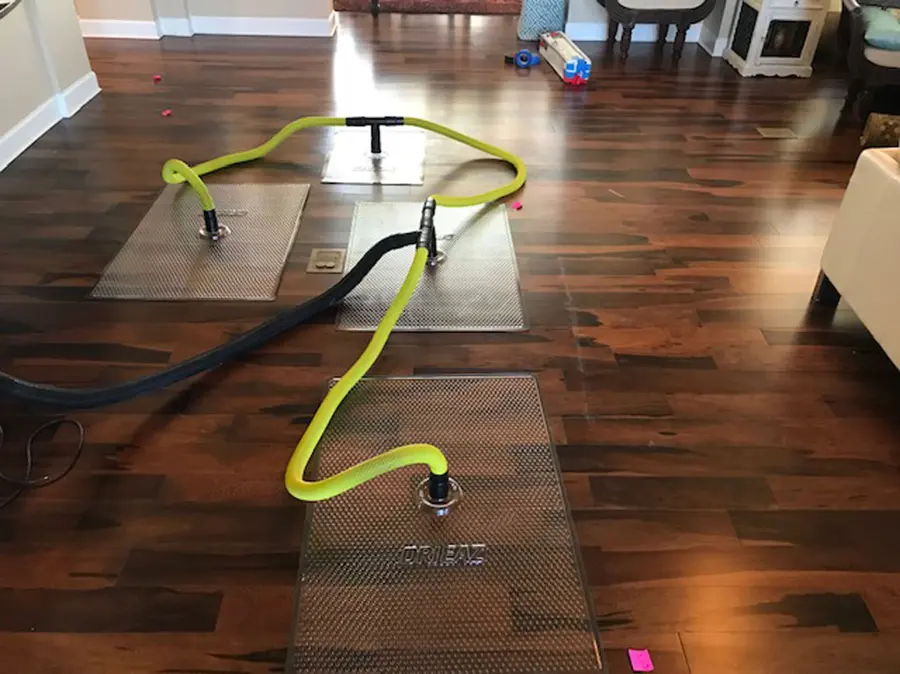
First steps for hardwood floor drying in Weare
Hardwood floors react to water faster than most finishes. Boards drink it through the seams and from below, and the longer they stay wet, the more the wood swells, cups and eventually buckles away from the subfloor.
Lift the water Soak up standing water, then lift rugs and furniture off the floor.
Keep the air moving Run fans and the house heat gently, but avoid high heat that can crack the boards.
Do not seal it Leave finishes and plastic covers off until the wood reads dry, since trapped moisture makes cupping worse.
Photograph and call Photograph the floor and call early, since the first days decide how much wood can stay.
Boards starting to cup?
Cupping means water is still in the wood or under it. Early drying can bring boards back, while waiting leaves them to buckle.
(888) 670-6527Ask about wood readingsHow the Weare restoration team handles hardwood floor drying
Rapid local response
Dispatch runs around the clock, and active water is treated as urgent at any hour, weekends and holidays included.
IICRC S500 drying standard
Structural drying, not surface drying: air movers and LGR dehumidifiers sized to the class of loss, checked with daily readings.
Claim-ready documentation
Moisture maps, daily psychrometric logs and timestamped photos taken before any demolition go into the claim file.
Cold-climate know-how
Frozen pipes, ice dams, snowmelt in older stone basements and spring river flooding set how a home here gets wet.
What does hardwood floor drying cost in Weare, NH?
Hardwood floor drying costs about $1,500 to $18,000. One room caught within a day is the low end, while buckled or contaminated boards and subfloor removal cost the most.
- Water caught within a day
- Mats and one dehumidifier
- Daily wood readings
- Wet flooring across a level
- Mats, panels and air movers
- Subfloor drying
- Buckled or contaminated boards
- Boards pulled to dry the subfloor
- Long drying before refinishing
Documentation for your insurance claim
The restoration team builds the claim file: a moisture map, daily drying logs, timestamped photos before demolition and a line-item scope. A sudden pipe or appliance leak is usually a homeowners claim; rising flood water usually needs a flood policy. Coverage depends on your policy, so check with your own insurer.
Ranges are typical, not a quote: water category, square footage, material class and how fast drying started move the number most. Run the water damage cost calculator for a closer range.
How hardwood floor drying is handled in Weare
The tech who does the walkthrough maps moisture before any equipment goes down, so the drying plan matches what is actually wet. Equipment stays until the readings say dry, not until it looks dry.
Check the wood
Moisture meters record the floor and subfloor so the drying plan has a starting point.
Set the mats
Drying mats and dehumidifiers go in, with hoses sealed against the floor.
Open as needed
A few boards or small openings release moisture from the subfloor where readings demand it.
Log and release
Daily readings continue until the floor matches the reference, then the equipment leaves.
How wet wood behaves
Wood absorbs moisture unevenly. The edges swell first and the board cups, then pressure can push the whole floor up. A floor that is dried quickly may flatten again, while a floor left wet for days often needs sanding or replacement.
- Cupping with raised board edges
- Crowning after the floor dries too fast
- Gaps opening as boards shrink back
- Buckling where boards lift off the subfloor
Drying mats and panels
A mat system pulls water from the boards through the top surface, while a dehumidifier removes it from the air. Where finish seals the wood, small holes or the removal of a few boards may help the subfloor release moisture too.
Save or replace
Boards can often be saved when clean water was found within a day and the wood was never contaminated. Floors soaked by flooding or sewage are removed, since contaminated wood cannot be sanitized. Refinishing waits until readings match unaffected flooring. Species, finish and board width all change the odds, and a floor over a crawl area or a basement can take on water from below as well as from above the boards.
- Clean water caught fast gives the best odds
- Contaminated boards are removed
- Moisture readings set the refinishing date
Drying and refinishing
After drying, a flooring contractor decides whether sanding and refinishing is enough. Related work appears at hardwood floor drying in Concord and structural drying, which handles the subfloor beneath.
Hardwood floor drying across Weare and nearby towns
Hardwood drying covers homes across town, from older village houses near Chase Village and Clinton Grove to farmhouses and lake homes along Route 114, Route 77 and Route 149.
The same service nearby: hardwood floor drying in Concord, Hopkinton, Bow.
Hardwood Floor Drying questions in Weare, NH
Water still spreading?
Hardwood floors getting wet? Describe the rooms and the team will plan the mat drying.
(888) 670-6527 Request floor dryingCan a hardwood floor be saved after a leak?
Often, if the water was clean and drying started within a day or two. The odds drop sharply once boards have cupped for several days.
How long does hardwood take to dry?
Most floors need a week or more because wood releases moisture slowly. Dense species and wide boards take longer, and thick solid planks can need two weeks.
Will the floor need to be refinished?
Slight cupping may flatten, but many floors need sanding and a new finish. A flooring contractor decides after the drying is done.
Is engineered flooring the same?
Engineered boards have a thin top layer on a plywood or composite core, and the core can swell and delaminate. They dry less reliably than solid wood.
Will insurance pay for the floor?
Sudden water damage is commonly covered, including drying costs and refinishing. A written moisture log supports the claim.
Dry the wood before it cups out of shape
Mats, dehumidifiers and daily wood readings give boards the best chance.
(888) 670-6527Call about wet hardwood