Ice Dam Water Damage in Hopkinton, NH
Meltwater backs up behind ice at the roof edge and slips under the shingles into the attic. The restoration team removes wet insulation, dries the ceilings and walls below and documents the damage.
(888) 670-6527Get ceiling and attic drying started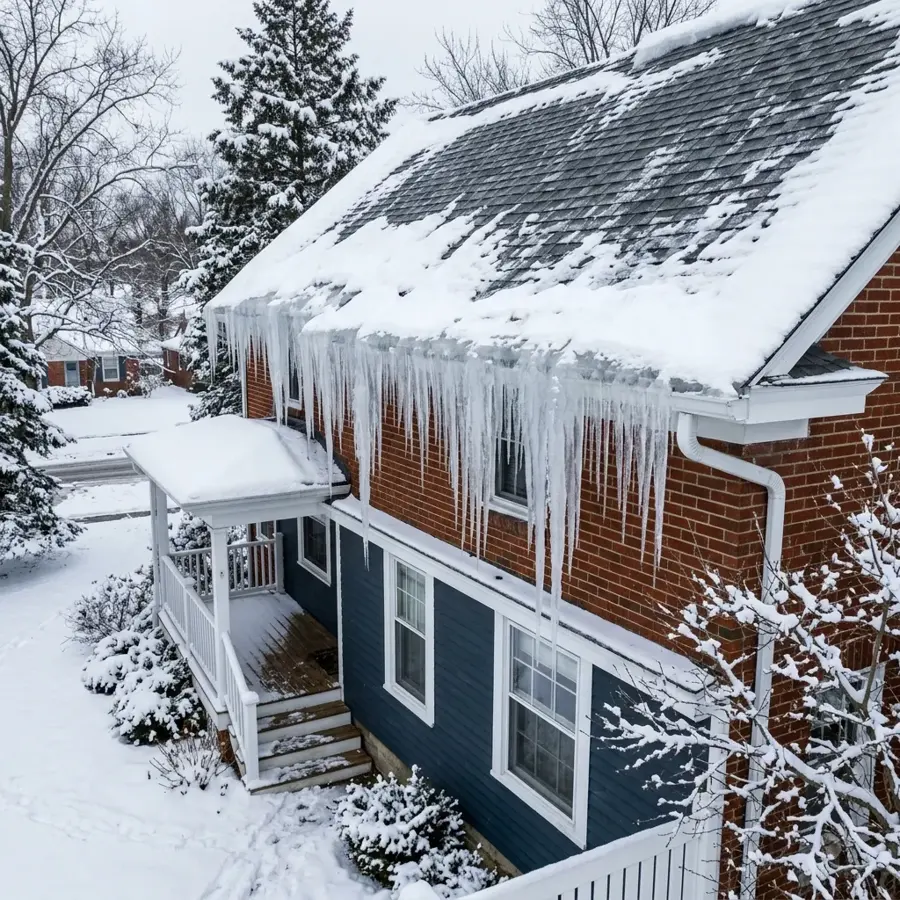
First steps for ice dam water damage in Hopkinton
An ice dam is a ridge of ice along the eaves that traps melting snow behind it. The trapped water has nowhere to go but under the shingles, down through the roof deck and into the insulation. Inside Hopkinton homes it usually first appears as a brown ceiling stain or a damp upper wall.
Protect the room Move furniture out from under stains, set buckets under active drips and keep clear of any ceiling that sags or bulges.
Photograph the damage Capture the ice at the eaves, the ceiling stains and the wet walls, with dates, before the temperature changes again.
Leave the ice alone Hammering at an ice dam tears up shingles. A roofer can steam or cut channels safely, so leave removal to that trade.
Call the drying team Wet attic insulation holds water against the ceiling, so the sooner it comes out, the less drywall has to be replaced.
Ceiling bulging or sagging?
Stay out of the room, because trapped water is heavy. Keep people and pets clear and ask the crew how to release it safely.
(888) 670-6527Report a sagging ceilingHow the Hopkinton restoration team handles ice dam water damage
Rapid local response
Dispatch runs around the clock, and active water is treated as urgent at any hour, weekends and holidays included.
IICRC S500 drying standard
Structural drying, not surface drying: air movers and LGR dehumidifiers sized to the class of loss, checked with daily readings.
Claim-ready documentation
Moisture maps, daily psychrometric logs and timestamped photos taken before any demolition go into the claim file.
Cold-climate know-how
Frozen pipes, ice dams, snowmelt in older stone basements and spring river flooding set how a home here gets wet.
What does ice dam water damage cost in Hopkinton, NH?
A ceiling stain from an ice dam costs $1,000 to $2,500 to dry, water inside exterior walls runs $2,500 to $6,000, and a long freeze-thaw cycle across several rooms reaches $6,000 to $15,000.
- One ceiling patch by the eaves
- Soaked insulation pulled above it
- Two to four days of equipment
- Water inside outer wall cavities
- Drywall or plaster cut open
- Attic and cavity drying
- Repeated freeze-thaw leaks
- Insulation along the eaves
- Several ceilings and walls
Documentation for your insurance claim
The restoration team builds the claim file: a moisture map, daily drying logs, timestamped photos before demolition and a line-item scope. A sudden pipe or appliance leak is usually a homeowners claim; rising flood water usually needs a flood policy. Coverage depends on your policy, so check with your own insurer.
Ranges are typical, not a quote: water category, square footage, material class and how fast drying started move the number most. Run the water damage cost calculator for a closer range.
How ice dam water damage is handled in Hopkinton
The tech who does the walkthrough maps moisture before any equipment goes down, so the drying plan matches what is actually wet. Equipment stays until the readings say dry, not until it looks dry.
Find the wet layers
Thermal imaging maps the cold, wet areas in the ceiling and walls, and meters check the insulation, drywall and framing.
Remove the wet insulation
Soaked insulation comes out of the attic first, and then the ceiling is opened where the readings stay high.
Dry cavities and attic
Air movers and dehumidifiers dry the exposed cavities, with the attic ventilated so it does not stay damp.
Confirm before closing
Final readings prove the framing is dry before insulation and drywall are replaced by the repair trades.
How the leak forms
Heat rising into the attic warms the roof and melts the snow above it. The water runs down to the cold overhang, refreezes and builds a wall of ice, which holds back everything that melts afterward until it finds a gap.
- Warm attic air melts the snow on the roof
- Meltwater refreezes at the cold eaves
- The ice ridge pushes water under the shingles
- Insulation and ceilings soak up the rest
Winter backdrop in this part of the state
Heavy winter weather is a regular visitor. Residents were without electricity for two or three days after the January 1998 ice storm, and Merrimack County was named in federal disaster declarations for the December 2008 ice storm and the February 2013 snowstorm. Long cold spells followed by thaws, the pattern the National Weather Service tracks, are what build ice dams.
What the restoration team removes
Wet insulation holds water against the ceiling, so it comes out of the attic first. The ceiling below is opened only where the readings demand it, and exterior wall cavities get the same treatment. Roof repair stays with a roofer, while the drying team clears the water inside. Related work appears under roof leak drying and structural drying.
- Soaked attic insulation near the eaves
- Stained or sagging ceiling drywall
- Wet wall cavities along exterior walls
Before the next thaw
Dry framing and clean attic ventilation take away the conditions that let mold start in damp wood. The final readings show when the roofer and insulation trades can safely close everything back up.
Ice dam water damage across Hopkinton and nearby towns
Ice dam work spans Contoocook, Hopkinton Village and West Hopkinton and the roads between them, wherever heat leaking into the attic melts roof snow faster than the eaves can shed it.
The same service nearby: ice dam water damage in Concord, Weare, Bow.
Related water damage services in Hopkinton
Ice Dam Water Damage questions in Hopkinton, NH
Water still spreading?
Ice at the eaves and a stain below? Describe it and the crew will plan the attic and ceiling work.
(888) 670-6527 Hopkinton roof leak helpWhat causes an ice dam?
Heat escaping into the attic melts snow on the roof. The water runs to the cold eaves, refreezes and forms a ridge that traps later melt.
Why does the leak show up on the ceiling?
Trapped water works under the shingles, through the roof deck and into the insulation, where it spreads until it finds the ceiling below.
Does a big ice storm make ice dams more likely?
Heavy snow and ice add weight and trapped melt. Winter events such as the January 1998 storm are the regional backdrop for ice dam leaks, because deep snow keeps the roof edge cold while the attic stays warm.
Will insurance pay for ice dam damage?
Policies differ. Many cover the interior water damage but not the roof repair, and the adjuster will want clear photos and dated notes.
How long does the drying take?
Two to four days for a ceiling stain, and longer when wall cavities or several rooms are involved.
Can wet attic insulation stay in place?
Rarely. It holds water against the ceiling and dries slowly, so removal is the usual answer once readings confirm it is soaked.
Wet insulation above the ceiling? Get it out.
The restoration team removes soaked layers, dries the ceilings and walls and records the readings for your claim.
(888) 670-6527Request attic drying