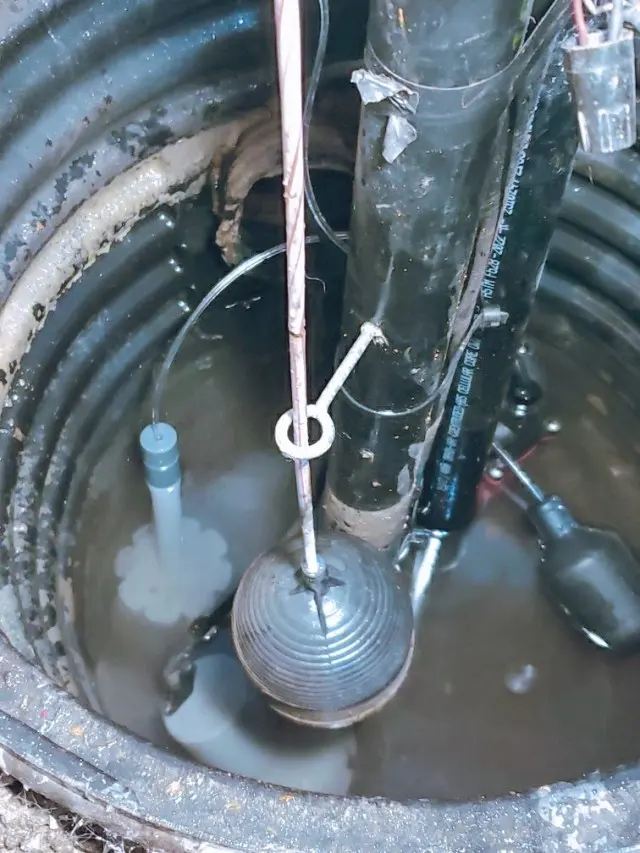
A sump pump only works while the power is on. After the January 7, 1998 ice storm, Hopkinton residents were without electricity for two or three days, which is long enough for a pit to fill and spill across a basement floor.
Key takeaways
- Ice storms bring outages, and a sump pump stops when the power does.
- Merrimack County has had federal disaster declarations for ice storms in January 1998 and December 2008 and for a snowstorm in February 2013.
- A failed pump can mean a full pit, a stuck float, a frozen discharge pipe or a power loss, and each changes the cleanup a little.
- Inside the sewer district, the Sewer Ordinance bars foundation drains, downspouts and groundwater from connecting to the sanitary sewer.
- Water from a sump pit is groundwater and is treated as contaminated during cleanup.
Why outages and wet basements arrive together
Storms that knock out power often bring the water too. Heavy rain, snowmelt or an ice storm raises the groundwater, then the outage stops the pump meant to handle it.
Merrimack County was in federal disaster declarations for the ice storm of January 7 to 25, 1998, the ice storm of December 11 to 23, 2008 and the snowstorm of February 8 to 10, 2013. In town itself, the January 1998 storm left residents without electricity for two or three days.
That sequence repeats because the same weather that stresses the power system also saturates the ground. Water that would have been pumped out as it arrived instead collects in the pit until the outage ends.
What a failed sump pump looks like
Not every failure is an outage. A worn motor, a stuck float or ice in the discharge pipe can stop a pump while the lights are on, so a cleanup crew checks the cause as well as the water.
- The pit is full to the rim or overflowing.
- Water is spreading from the pit across the floor.
- The motor hums but nothing discharges.
- A float is stuck and the pump never starts.
- The discharge pipe outside is frozen or blocked.
Winter trouble with the discharge pipe
Winter adds its own failure. Water leaving the pump travels through a discharge pipe outdoors, and in a hard freeze that pipe can ice over.
The pump then runs against a blocked pipe, the pit fills and the water goes where it can, which is usually the basement floor.
Thaws make it worse. Around Concord, winter brings one to three days a month at 50 F or higher, so snow and ice melt over frozen ground and send water to the foundation while the discharge pipe may still be iced.
- Check that the discharge outlet is not buried in snow or ice.
- Clear snow from around the outlet before a thaw.
- Listen for a pump that runs without moving water.
- Watch the pit during the first warm days after a freeze.
What to do while the power is out
A pit that fills during an outage can recede once power returns, yet the water that reached the floor has already soaked wall bases and stored goods.
- Do not wade through water near the panel, outlets or plugged-in equipment.
- Use a generator only outdoors, well away from doors and windows.
- Bail, or use a battery or generator powered pump, if it can be done safely.
- Lift stored items off the floor onto shelves.
- Photograph the water and the pit before moving anything.
- Call a restoration crew once it is safe to enter.
Backup power, set up safely
A battery backup or a generator keeps a pump working during an outage, but both have to be set up correctly. A generator belongs outdoors, well away from windows and doors, because exhaust carries carbon monoxide.
A pump on backup power still needs a clear discharge pipe and a working float. Testing the system before the storm is the only way to find out whether it works.
- Battery backups have limited run time and need maintenance.
- Generators need safe outdoor placement and a safe connection.
- Both should be tested under load before storm season.
The sewer district rule for sump water
The Sewer Ordinance applies to the Sewer District, which covers properties abutting a public sewer and others the town designates. The town sewer serves only portions of Contoocook, and homes outside the district use on-site septic systems.
Inside the district, the ordinance bars connecting roof downspouts, exterior foundation drains, areaway drains, groundwater, cooling water or other surface runoff to a building sewer or drain that leads to the public sanitary sewer. That means sump water cannot be tied into a sanitary drain there, and a discharge belongs outdoors, on the ground, away from the foundation.
How a sump pump failure is cleaned up
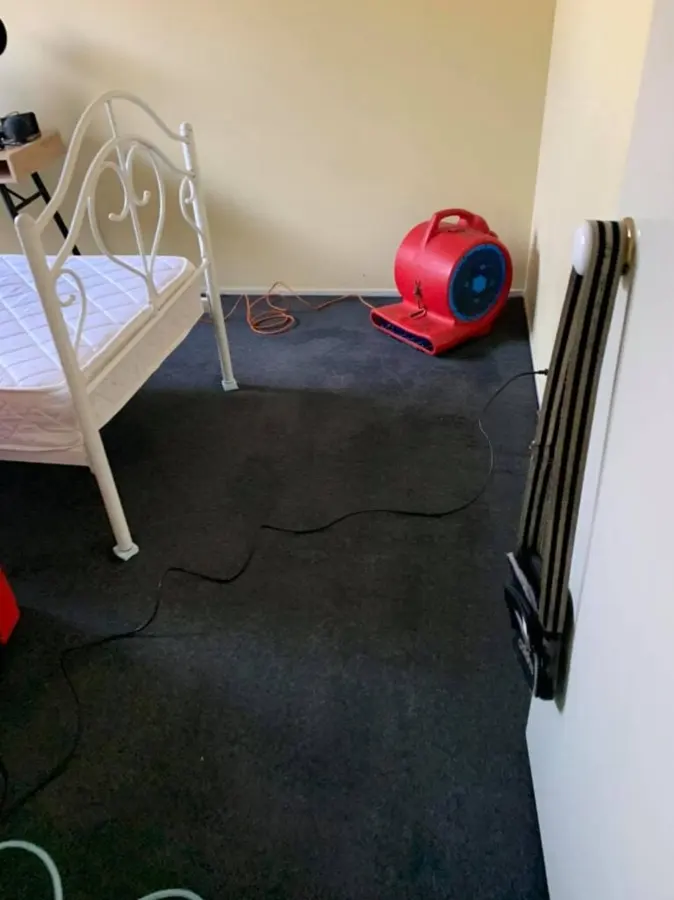
A sump pump failure cleanup begins with extraction, then removal of wet materials and cleaning, because pit water is groundwater and is handled as contaminated.
Water that spread across the floor is covered by basement flooding cleanup, which adds structural drying of walls and floors.
- Extraction of standing water from the floor and the pit
- Removal of wet carpet, pad, cardboard and the base of finished walls
- Cleaning and disinfecting of hard surfaces
- Air movers and dehumidifiers, guided by moisture readings
- A note on the pump, float and discharge path for the plumber or homeowner
Floodplain homes and the next storm
The 2004 Hazard Mitigation Plan counted 197 residential parcels in the 100 and 500 year floodplains, about 8.9 percent of the 2,210 homes counted in 2000. In July 2021, heavy rain closed Elm Brook Park under floodwater because the park sits in the flood storage area.
Homes anywhere in town can face the same sequence, and the Hopkinton water damage pros handle both the pump failure and the wet basement it leaves.
The Contoocook River flows through the center of Contoocook village, and the Warner River forms the village's northern edge, so basements there can see water from more than one source.
- Test the pump before the first heavy rain or ice storm.
- Plan for backup power or a battery pump.
- Check that the discharge pipe is clear and runs away from the house.
- Keep the pit lid secure and the area around it clear.
Questions
Why does a sump pump stop during a storm?
A pump needs electricity, so a power loss stops it. Ice in a discharge pipe, a stuck float or a worn motor can also stop it while the power is on.
Can sump water go into a sanitary sewer drain in the sewer district?
No. The Sewer Ordinance bars connecting foundation drains, downspouts, groundwater and other runoff to a building sewer or drain that leads to the public sanitary sewer.
Is the water from a sump pit clean?
No. It is groundwater that has crossed soil, so it is treated as contaminated, and cleaning goes along with drying.
What comes first when a pit overflows?
Make the area safe from electricity, get items off the floor, photograph the damage and call a crew. Extraction comes first, since standing water keeps soaking into wood and masonry.
Does the flood control dam keep floods out of Hopkinton?
The 2004 Hazard Mitigation Plan says the Hopkinton Everett project is designed to protect areas downstream on the Merrimack River, not Hopkinton itself. Local drainage and pump upkeep still matter.
How long can a wet basement sit before damage spreads?
Water starts wicking into wall bases, wood and stored goods right away, and mold can begin to grow in 24 to 48 hours. Extraction and drying should start as soon as the area is safe.