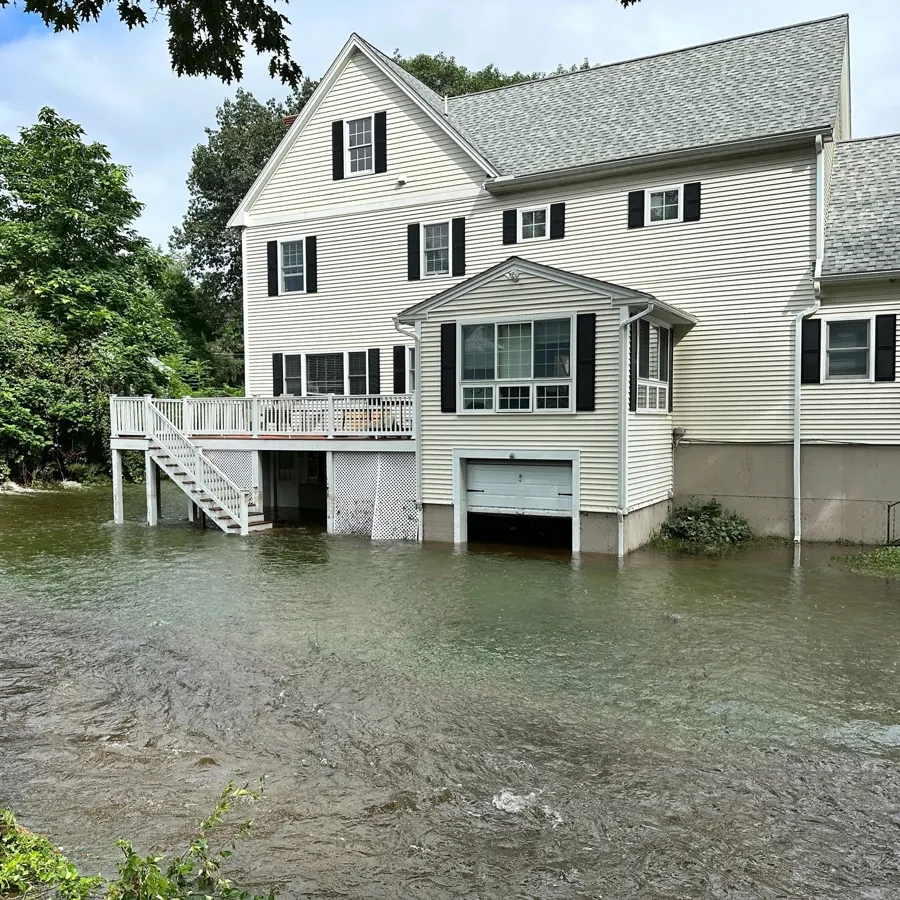
The Merrimack River runs through Concord, and the National Weather Service gauge there sets flood stage at 14 feet. The record crest, 26.2 feet in March 1936, shows how far above that mark the river has gone.
Key takeaways
- Flood stage at the Merrimack River gauge is 14 feet.
- The record crest was 26.2 feet in March 1936, and the September 1938 hurricane crested at 23.0 feet.
- The May 2006 Mother's Day flood dropped more than 8 inches of rain in three days and pushed the river back over flood stage.
- River water is Category 3, so cleanup removes soaked porous materials and cleans before drying.
- A river gauge does not show every local flood source, since smaller rivers and runoff can also fill basements.
Reading the gauge numbers
A river gauge reports the height of the water in feet. Flood stage is the height at which a rising river begins to cause damage or disruption, and it is the number forecasts use when they talk about a river on the rise.
These are the Merrimack River readings that matter most:
Flood stage is set for the river and the areas around it, not for any single address. Whether a given basement floods depends on its elevation, its drainage and how it was built.
- Flood stage: 14 feet
- May 15, 2006: 15.12 feet, back over flood stage after the Mother's Day flood
- September 22, 1938: 23.0 feet, the hurricane crest
- March 20, 1936: 26.2 feet, the record crest
The record years
Four dates explain most of what the gauge history says about this river.
The 2006 and 2023 events share a cause: heavy rain, with snowmelt on frozen ground in 2023.
March 1936 and September 1938
The Merrimack set its record crest here in March 1936, at 26.2 feet, more than 12 feet above flood stage.
The September 1938 hurricane crested at 23.0 feet, 9 feet above flood stage.
May 2006 and December 2023
The May 2006 Mother's Day flood dropped more than 8 inches of rain in three days and pushed the river back over flood stage.
The December 2023 storm brought rain and snowmelt onto frozen ground and moderate flooding in the Merrimack basin.
Other water that does not wait for the gauge
The Merrimack is not the only river in the city. The Contoocook River joins it at Penacook, the Soucook River forms the boundary with Pembroke and the Turkey River crosses the southwest quarter.
Rain on frozen ground, snowmelt and summer downpours can also overload drains and fill basements even when the main gauge stays below flood stage.
- Smaller rivers can rise on their own schedule.
- Frozen ground sheds meltwater toward foundations.
- Summer downpours can overwhelm storm drains and sump pumps.
- A power loss can stop a sump pump during any of these.
Neighborhoods and local low spots
The service area covers Downtown and Main Street, the South End, the North End, the Heights, East Concord, West Concord and Penacook. A gauge reading describes the river, not any one street.
Low spots, old foundations and drainage patterns differ from one neighborhood to the next, so two homes can see very different water at the same time.
What river water does inside a building
Flood water from a river is classified as Category 3, because it carries silt, bacteria and whatever the river picked up. Even a few inches deep, it changes the job from drying to cleaning and removal.
A flood water cleanup therefore removes soaked carpet, pad, insulation and wicked drywall instead of drying them in place.
- Silt and mud are removed from floors and wall bases.
- Porous materials that touched the water are discarded.
- Hard surfaces and framing are cleaned and disinfected.
- The structure is dried only after cleaning.
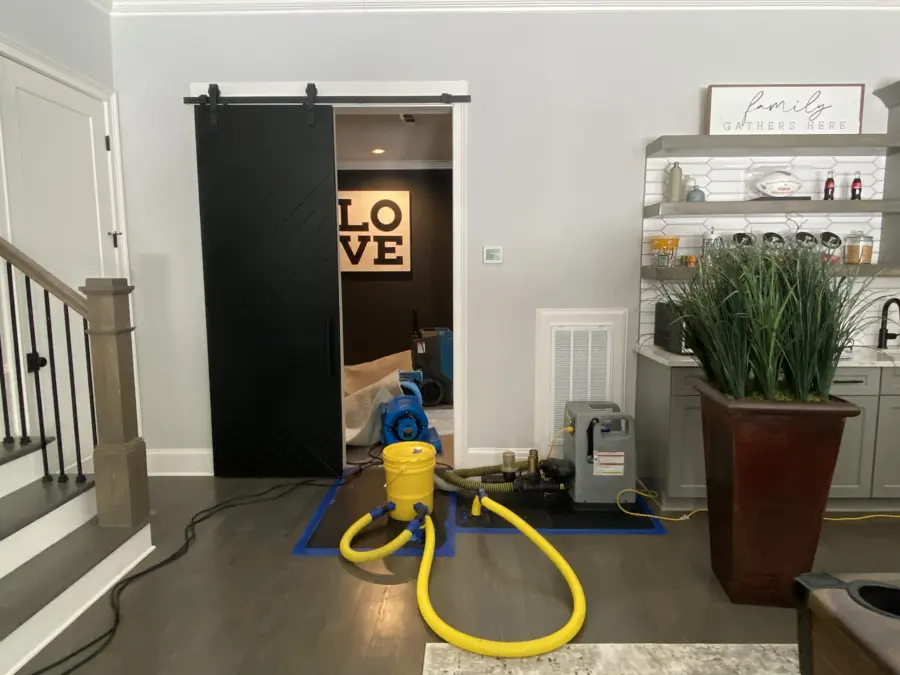
Extraction and drying after a rise
Standing water goes first. A water extraction crew uses pumps and truck-mounted or portable units, working down a flooded basement in stages so the walls are not stressed by sudden pressure changes.
The next phase is a basement flooding cleanup, and the last is structural drying, which continues until moisture readings return to normal.
- Extract and remove silt first.
- Cut out and discard contaminated materials.
- Clean and disinfect.
- Dry with air movers and dehumidifiers.
- Confirm dry readings before rebuilding.
After the water is out
Once silt and contaminated materials are out, drying begins. Air movers and dehumidifiers run while moisture meters track walls, floors and framing, and rebuilding waits for normal readings.
Photos of the water mark and of damaged items, taken before cleanup, give a clear record of how high the water reached.
Using the numbers to plan
The gauge numbers are most useful before the water arrives. A few steps turn a forecast into preparation.
- Watch National Weather Service river forecasts when the Merrimack is rising.
- Move vehicles, stored goods and electronics before water reaches a basement.
- Know how to shut off the main electrical breaker safely.
- Photograph a dry basement for comparison afterward.
- Remember that a rise below 14 feet can still come with local runoff.
Staying safe during a rise
Floodwater can hide debris and carry contamination, and the safest choice is to stay out of it.
- Keep children and pets away from standing water.
- Turn off gas and electricity only if it can be done from a dry spot.
- Do not drive through flooded roads.
- Wait for the all clear before entering a flooded basement.
From forecast to cleanup
A forecast is the first warning and cleanup is the last step. Between them, a few decisions matter: when to move belongings, when to cut power and when to call for help.
Residents of older homes, such as the 19th-century houses in the South End and North End, may have stone foundations that let water in even before the river reaches flood stage.
Questions
What is flood stage on the Merrimack River at Concord?
Flood stage at the National Weather Service gauge is 14 feet.
How high did the river get in 1936?
The record crest was 26.2 feet in March 1936. The September 1938 hurricane crested at 23.0 feet.
Is the Merrimack the only source of flooding?
No. The Contoocook River joins it at Penacook, the Soucook River forms the boundary with Pembroke and the Turkey River crosses the southwest quarter. Rain on frozen ground and summer downpours can flood basements too.
Is flood water safe to clean up at home?
No. River water is Category 3 and can carry bacteria, so protective gear and proper disposal of soaked materials matter.
Why is a flooded basement pumped in stages?
Removing water too fast can leave soil pressure outside the wall higher than the pressure inside, which can stress the wall, so crews work in steps.
Does a rise below flood stage still mean wet basements?
It can. Rain on frozen ground, snowmelt and summer downpours can fill basements through foundations, drains and sump pits even when the gauge stays below 14 feet.